

Recap of Week 4 & Preview of Week 5 of Session
Senate President Ben Albritton has made it clear that he expects there will be no major property insurance law changes from this legislative session. He said so just a few hours before the House passed a bill last week creating new oversight requirements on property insurance affiliates, and another bill that would change the process for dispute resolutions involving Citizens Property Insurance Corporation. “There are limitations on the profitability that insurance companies can make regardless of what anybody in the world believes, that is the fact. That is Florida statute,” Albritton said in televised remarks to the news media last Wednesday (beginning at timecode 3:40). He added that property insurance is subject to inflation, just like food, utilities, and the like. You’ll read more about those two bills below in this Bill Watch.
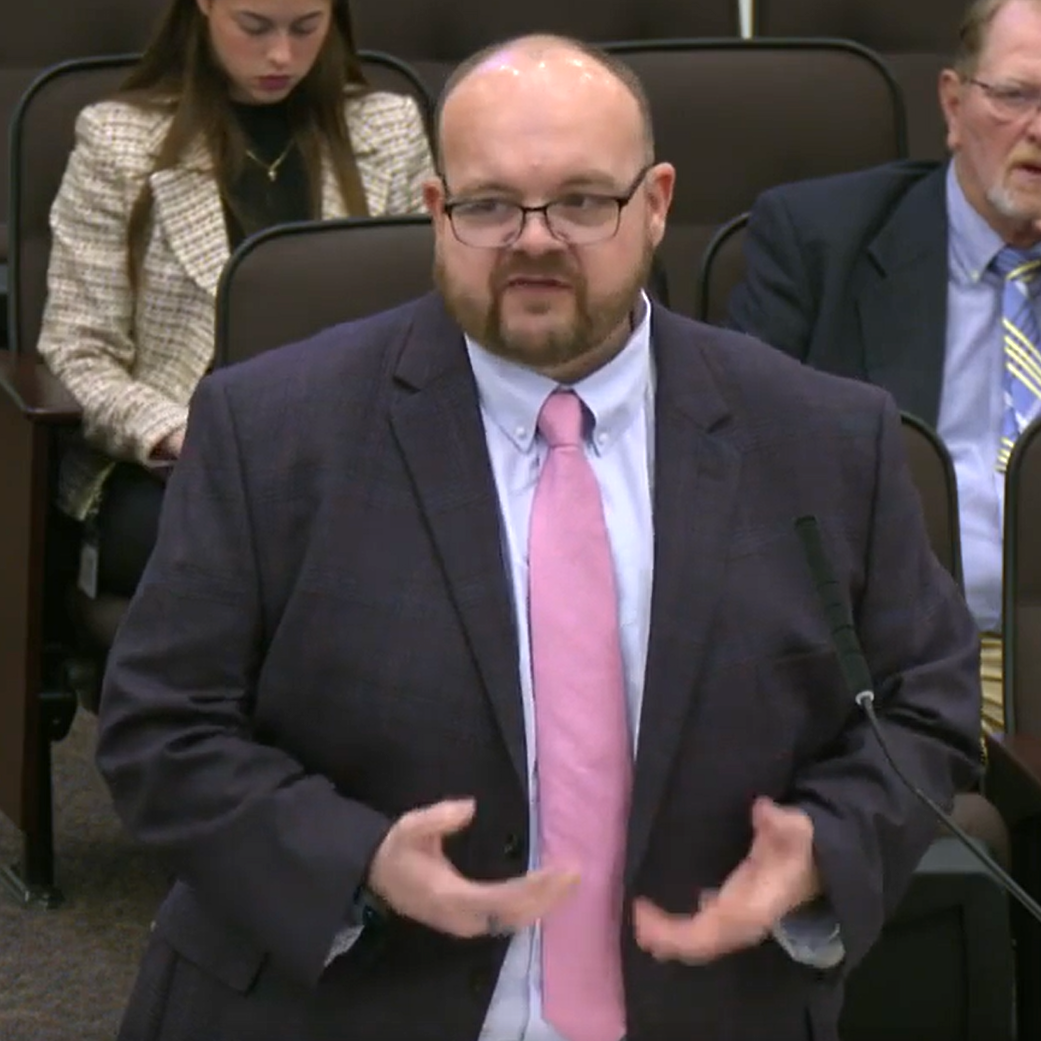
Florida Insurance Commissioner Michael Yaworsky testifying before the Senate Appropriations Committee on Agriculture, Environment, and General Government, February 4, 2026. Courtesy, The Florida Channel
Florida Insurance Commissioner Michael Yaworsky also spoke the truth last week during his testimony about a bill that would allow surplus lines insurance companies to take out policies from Citizens Insurance, just as the admitted (regulated) carriers do, as part of Citizens ongoing depopulation program. Yaworsky told a Senate committee that the bill’s current structure raises substantial consumer‑protection concerns, particularly because it shifts policyholders into the surplus lines market.
“When a consumer of any kind goes to seek insurance coverage for their property, the first goal is always to place them in the admitted market area,” said Yaworsky. “That’s because that contains a number of key protections for that consumer around the overall purchase of insurance, the claims handling, the entire mechanism of how it’s regulated, (as) its rates and forms are reviewed by the Office (of Insurance Regulation) for their legal sufficiency. The surplus lines market, on the other hand, is almost the exact opposite.” The commissioner noted a list of concerns he has that you will read more about below. (You can listen to his full testimony on The Florida Channel, beginning at timecode 36.24.)
We at LMA applaud the commissioner for educating senators about surplus lines, when all too often the lines between the admitted market and the surplus lines market are blurry for consumers. Surplus lines carriers play a vital part in our Florida property insurance market and the commissioner was quick to point out what that part is in his remarks.
Look for the state budget to begin taking center stage after this week. There was a bit of a stir between the two chambers last week, with Senate leaders saying they were ready to release their version of next year’s budget but were delayed waiting on the House version. House leaders shot back that one has nothing to do with the other – foreshadowing perhaps pending budget difficulties of the kind that caused last year’s session to go into a 45-day overtime.
Here is the updated list of legislative bills we’re following. You can click the bill link in the list below to go directly to the bill and its details further below. We’ve organized the bills into three categories: those on this week’s agenda, those that are progressing, and those that are stagnant. “New” and “Updated” bills are so noted. We will continue to monitor each chamber’s position on relevant bills and add further bills showing advancement as warranted. Updates within each bill are noted in blue font:
Bills On Agenda This Week
Home Hardening Products Updated
Unauthorized Aliens Updated
Department of Financial Services Updated
Reinsurance Intermediary Managers Updated
Bills That Are Moving
Citizens Property Insurance Corporation Updated
Protected Cell Captive Insurance Companies Updated
Dispute Resolutions Involving Citizens Property Insurance Corporation Updated
Nature-Based Coastal Resilience Updated
Litigation Financing Updated
Property Insurance Affiliates Updated
Assessment of Property Used for Residential Purposes Updated
Roofing Requirements for Property Insurance
Residential Property Insurance
Payment Scam Task Force
Mandatory Human Reviews of Insurance Claim Denials
Public Adjuster Contracts
Land Use Regulations for Local Governments Affected by Natural Disasters
Bills Not Moving
Rate Filings for Property Insurers
Homeowners’ Insurance Policies
Whistleblower Protections for Employees and Independent Contractors of Property Insurers
Emergency Residential Property Insurance Assistance Trust Fund/Department of Financial Services
Transparency in Insurance Matters
Resolution of Disputed Property Insurance Claims
Insurance Solutions Advisory Council
Initiating a Property Insurance Interstate Compact
Motor Vehicle Insurance
Required Reports of the Office of Insurance Regulation
Rates for Citizens Property Insurance Corporation Coverage
Property Insurer Financial Strength Ratings
Coverage by Citizens Property Insurance Corporation
Insurance
Florida Hurricane Catastrophe Fund
Bills on Agenda This Week
(UPDATED) SB 78 Home Hardening Products by Sen. Rosalind Osgood (D-Fort Lauderdale) and the similar HB 185 by Rep. Lisa Dunkley (D- Fort Lauderdale) provide a sales tax exemption for home hardening products used on eligible residential property; specify a limitation on exemptions; require property owners to submit an application to the Department of Revenue in order to be eligible; and provide requirements for the department in issuing refunds. SB 78 unanimously passed the Community Affairs Committee as a committee substitute bill and awaits its next hearing before the Finance and Tax Committee, the second of three scheduled committee stops.
HB 185 is scheduled to be heard tomorrow (February 10, 2026) before its first committee hearing, House Ways and Means Committee. An amendment has been filed and will be up for vote. The amendment creates a limited sales tax refund for certain home hardening products purchased between July 1, 2026, and June 30, 2028. (Return to Top of List)
(UPDATED) SB 1380 Unauthorized Aliens by Sen. Jonathan Martin (R-Lee) and the similar bill HB 1307 Unauthorized Aliens by Rep. Berny Jacques (R-Clearwater) is part of Chief Financial Officer, Blaise Ingoglia’s, legislative proposal to fight back against illegal immigration. The legislative proposals remove Illegal aliens as covered employees in the Workers’ Compensation statute; require companies to use E-Verify to submit a Worker’s Compensation claim; forces illegal immigrants’ insurance companies to accept fault if an illegal immigrant is involved in a car accident in Florida.
Both bills are being introduced in their first committee hearings this week. SB 1380 is scheduled to be heard on Wednesday (February 11, 2026), before the Senate Banking and Insurance committee. HB 1307 is scheduled to be heard tomorrow (February 10, 2026) before the House Commerce Committee. (Return to Top of List)
(UPDATED) HB 1221 Department of Financial Services by Rep. Chip LaMarca (R-Lighthouse Point) and the identical SB 1452 by Sen. Keith Truenow (R-Tavares) comprise an omnibus bill for the Department that does many things. They revise multiple statutory provisions to enhance the Department of Financial Services’ authority, adjust insurance and reinsurance regulations, refine the My Safe Florida Home program, and update unclaimed property processes. Specifically, the proposals expand rulemaking authority for the Chief Financial Officer and clarifies processes for advance payments; adjust eligibility, inspections, grants, and requirements under the My Safe Florida Home Program, including more flexible reinspection and contractor verification rules; reconfigure the Florida Financial Management Information System coordinating council’s composition and duties, requiring collaborative annual workplans and clarifying oversight structures; authorize the Department of Financial Services to purchase insurance, excess insurance, and reinsurance directly, engage reinsurance brokers, and determine necessary property insurance coverage; modify timeframes and procedures for workers’ compensation disputes and reimbursement schedules; establish permanent and periodic disqualification periods for licensing under funeral, cemetery, and consumer services boards, with pathways for exemptions and restoration of rights; streamline license transfers, reexaminations, and qualifications for general lines, life, and health agents, with enhanced compliance requirements on public adjusters and bail bond applicants; overhaul unclaimed property laws by redefining dormancy periods, clarifying due diligence requirements, expanding notification methods, detailing abandoned property reporting and remittance, and preserving ownership rights until final escheatment.
HB 1221 was heard, amended, and unanimously passed out of its first committee stop, House Insurance & Banking Subcommittee, on Tuesday February 3, 2026. Three amendments were adopted on the bill. The amendments require DFS to notify a My Safe Florida Home Program applicant at least five business days before classifying the application as abandoned, giving applicants a chance to show good cause; remove the requirement for certain funeral, cemetery, and consumer services applicants to disclose older misdemeanors indirectly related to the profession; and allow public officials to appoint or promote a relative as a firefighter if chosen through a competitive, collectively bargained process. It is awaiting a hearing before its second committee hearing, House State Administration Budget Subcommittee.
SB 1452 was heard, amended, and unanimously passed in its first committee hearing, Senate Banking and Insurance Committee, on Tuesday February 3, 2026. The amendment adopted clarifies a provision relating to title insurers and the applicability of chapter 626, F.S., to provide that title insurers, acting through corporate officers, are exempt from title insurance licensure and appointment requirements of Ch. 626, F.S. The amendment also repeals an obsolete reporting requirement relating to the submission of a list of attorney agents to DFS. It is awaiting a hearing before its second committee stop, Senate Appropriations Committee on Agriculture, Environment, and General Government. Both bills are more than 150 pages and we encourage readers to review and let us know of any concerns. (Return to Top of List)
(UPDATED) HB 99 Reinsurance Intermediary Managers by Rep. Richard Gentry (R-Astor) and the identical SB 394 by Sen. Tom Leek (R-Ormond Beach) revise the definition of the term “reinsurance intermediary manager” to exclude certain underwriting managers. HB 99 was heard and unanimously passed in its first committee stop, House Insurance & Banking Subcommittee, on Tuesday, February 3, 2026. No members asked questions and there was no debate. Representative Gentry explained that the bill focuses on reinsurance intermediary managers, who operate behind the scenes and do not interact with consumers. He said the proposal removes them from the existing intermediary‑manager statute by specifying that an underwriting manager handling assumed facultative risks for a reinsurer is exempt if that business represents less than 10% of the reinsurer’s annual gross written premium. According to Rep. Gentry, this change primarily affects smaller entities and shifts them to a different requirement − holding an agency license instead of their current form of licensure.
HB 99 is scheduled to be heard tomorrow (February 10, 2026) before its final committee stop, the House Commerce Committee, and then from there, would go to the full House.
SB 394 was heard and unanimously passed its second committee, the Senate Appropriations Committee on Agriculture, Environment, and General Government on Wednesday, February 4, 2026. Members had no questions about the bill, and its sponsor, Senator Leek, said the proposal would exempt underwriting managers from licensure when they handle facultative risks for a reinsurer and that work represents less than 10% of the reinsurer’s annual gross written premium. He emphasized that the change simply reflects how the Department of Financial Services has already been operating, noting that the agency has not required this type of licensure since 2023. The bill is awaiting its final committee stop, Senate Rules. (Return to Top of List)
Bills That Are Moving
(UPDATED) HB 943 Citizens Property Insurance Corporation by Rep. Mike Redondo (R-Miami) and the similar SB 1028 by Sen. Joe Gruters (R-Sarasota) furthers the effort to shrink Citizens’ policy count. HB 943 requires Citizens to implement a commercial lines clearinghouse to complement its existing personals lines clearinghouse; authorizes approved surplus lines clearinghouse insurers to participate in it; prohibits such insurers from participating in the personal lines clearinghouse; specifies that participation in the program is not mandatory for such insurers; specifies circumstances under which Citizens policyholders are not eligible for commercial lines residential coverage with Citizens; authorizes applicants or insureds to elect to accept coverage with specified insurers or elect to accept or continue coverage with Citizens; requires certain applicants & policyholders to pay specified premium for Citizens’ coverage; revises rights & authorizations for certain independent insurance agents; and removes the prohibition relating to commercial nonresidential policies.
HB 943 was heard, amended, and unanimously passed its first committee, the House Insurance and Banking Subcommittee, on Tuesday February 3, 2026. The amendment adopted does the following:
- Creates the term “premium equalization adjustment” to mean the difference in total cost between Citizens’ offer and an approved surplus lines insurer’s offer that is within 120% of Citizens’ offer;
- Provides that any applied premium equalization adjustment expires at the end of the policy term;
- Requires Citizens to contract with an administrator to establish and maintain a commercial clearinghouse for approved surplus lines insurers within 90 days of the bill becoming law;
- Clarifies that Citizens must establish a commercial clearinghouse for authorized insurers on or before January 1, 2028;
- Requires OIR to verify surplus lines clearinghouse insurers within 5 business days of the administrator’s recommendation;
- Provides that a commercial lines clearinghouse administrator may charge approved surplus lines clearinghouse insurers participating the in the program reasonable transaction, technology, administration, and other similar fees; and
- Provides that every application to the commercial clearinghouse is subject to a 5 business day period when participating insurers may select the application for coverage prior to Citizens extending an offer.
Representative Chambliss (D-Homestead) asked whether the bill was driven by the influx of new insurers entering Florida or simply reflected an overdue update to Citizens’ commercial processes. Representative Redondo responded that the legislation modernizes how Citizens handles commercial properties, which represent a small share of its policies but a disproportionately large share of its liability exposure. Representative Woodson (D-Hollywood) questioned whether the state has sufficient insurers to absorb roughly 3,000 commercial policies and whether this shift could create market gaps. Representative Redondo explained that the bill would expand competition by allowing additional insurers, including surplus lines carriers, to offer commercial coverage, while still permitting policyholders to remain with Citizens if they choose. In a follow‑up, Representative Woodson asked about safeguards for participating carriers, and Representative Redondo noted that these insurers must meet strict financial standards − often higher than those required of admitted carriers − to ensure they are well‑capitalized for the risks they assume.
In debate, Representative Overdorf (R-Palm City) supported the bill, drawing comparisons to earlier residential‑market reforms that successfully attracted private carriers and reduced Citizens’ exposure. He expressed confidence that extending a clearinghouse to commercial lines would similarly expand market capacity. Representative Woodson, who initially had concerns, ultimately described the measure as a consumer‑protection bill and a proactive step toward responsibly depopulating Citizens’ commercial portfolio.
HB 943 is awaiting a hearing before its final committee stop, House Commerce Committee, before going to the full House for vote.
The Senate bill requires that approved surplus lines clearinghouse insurers must have both an AM Best financial strength rating of at least A- (excellent) and be in the AM Best financial size category of VII (capital and surplus of at least $50 million) and eligible under the Florida Surplus Lines law; provides that approved surplus lines clearinghouse insurers must be recommended by the commercial clearinghouse administrator and approved by the OIR; and specifies that Citizens will contract with a clearinghouse administrator to establish and maintain the commercial clearinghouse for surplus lines. Citizens must select the clearinghouse administrator within 90 days after the bill becomes law; clarifies the timeframes and procedures for submission of commercial risks to the commercial lines clearinghouse for surplus lines; provides that the commercial lines clearinghouse administrator may charge approved surplus lines clearinghouse insurers and surplus lines agents participating in the program reasonable transaction, technology, administration, and other similar fees; requires the surplus lines agent, managing general agent, or managing general underwriter must pay the producing agent a commission that results in an effective commission percentage at least equal to the Citizens commission percentage in effect on January 1, 2026; provides that if a policyholder or applicant turns down an offer of coverage from the surplus lines insurer with material terms and conditions that are equivalent to or better than the Citizens policy for a rate that is not more than 20 percent more than the Citizens rate, the policyholder will have to pay a policy equalization surcharge on the Citizens policy; and provides that Citizens may, rather than must, establish a commercial lines clearinghouse for authorized insurers. There was discussion about the proposed clearinghouse at its previous committee hearing.
SB 1028 was heard and unanimously passed in its second committee, the Senate Appropriations Committee on Agriculture, Environment, and General Government, on Wednesday, February 4, 2026. Insurance Commissioner Michael Yaworsky provided public testimony on the bill and said that although he supports efforts to reduce Citizens Property Insurance Corporation’s commercial exposure, the bill’s current structure raises substantial consumer‑protection concerns—particularly because it shifts policyholders into the surplus lines market. He explained that the proposal reverses Florida’s traditional insurance framework by moving consumers away from the regulated admitted market, where rates, forms, and claims practices are overseen by the state, and into a largely unregulated system intended for sophisticated buyers.
Yaworsky warned that surplus lines carriers are not required to provide advance notice of renewal terms, leaving many policyholders vulnerable to last‑minute premium or coverage changes. He also cautioned that the bill could disrupt existing agent relationships or create conflicts of interest by allowing a Citizens‑hired broker to represent both sides of a transaction. Additional concerns included the potential for unchecked fees and commissions, the absence of regulatory oversight for the clearinghouse administrator, and the risk that policies could be divided among multiple global insurers in ways that obscure who ultimately backs a claim. The commissioner noted that his office has already provided suggested language to House members on HB 943 and expressed a willingness to work with the Senate sponsor to incorporate stronger consumer safeguards. He closed by reiterating support for Citizens’ depopulation efforts while urging significant revisions in this bill to ensure the process protects policyholders. The bill was advanced with the bill sponsor’s assurance that revisions would be made. It is awaiting a hearing before its final committee stop, Senate Fiscal Policy. (Return to Top of List)
(UPDATED) SB 990 Protected Cell Captive Insurance Companies by Sen. Tom Leek (R-Ormond Beach), and the identical HB 883 by Rep. Tom Fabricio (R-Miami-Dade) aim to authorize and regulate protected cell captive insurance companies by updating definitions, introducing new terms, and establishing capital and surplus requirements. This includes defining “protected cell captive insurance company” and clarifying related terms such as “general account,” “participant,” and “protected cell.” These companies will be permitted to insure only the risks of their protected cell participants, with specific capital, surplus, and net asset requirements. Additionally, rules will be set for creating and maintaining protected cells, requiring them to hold distinct assets and liabilities, conduct separate accounting, and limit exposure to their own claims. The regulations also allow for the formation, merging, or affiliation of protected cells and outline processes for converting existing captive insurance companies into protected cell structures. The Office of Insurance Regulation will oversee the financial and operational integrity of these entities, including approving participant contracts and managing insolvency notifications and asset valuations.
SB 990 was heard and unanimously passed on Wednesday, February 4, 2026, before its first committee, the Senate Banking and Insurance Committee. It is awaiting a hearing before its second committee, the Senate Appropriations Committee on Agriculture, Environment, and General Government. Among its supporters is the Florida Captive Insurance Association, a new association that is working to make Florida to a major domicile for captives. You can read more in the Insurance Journal.
HB 883 is still awaiting a hearing before its first committee, House Insurance & Banking Subcommittee. (Return to Top of List)
(UPDATED) SB 1716 Dispute Resolutions Involving Citizens Property Insurance Corporation by Sen. Jonathan Martin (R-Lee) and the comparable HB 863 by Rep. Yvette Bennaroch (R-Collier). Both bills remove Citizens’ ability to require policyholders to resolve claim disputes out of court through alternative dispute resolution. The House bill requires policyholder consent, while the Senate bill completely removes the current Division of Administrative Hearings (DOAH) arbitration program from Citizens law. SB 1716 is still awaiting a hearing before its first committee stop, Senate Finance and Tax. HB 863 was heard and passed with a 105-3 vote by the full House on Wednesday, February 4, 2026. It will now head to the Senate for consideration. (Return to Top of List)
(UPDATED) HB 1035 Nature-Based Coastal Resilience by Rep. James Vernon ‘Jim’ Mooney, Jr. (R-Key Largo) and its comparable SB 302 by Sen. Ileana Garcia (R-Miami) promotes green infrastructure and nature-based solutions such as living shorelines and restored natural systems. Both bills are moving through committees. SB 302 requires the Department of Environmental Protection to adopt rules and guidelines for nature-based solutions for improving coastal resilience; requires the department, in consultation with the Division of Insurance Agent and Agency Services of the Department of Financial Services, to conduct a statewide feasibility study regarding the value of nature-based solutions being used for a specified purpose, among other measures. There is an appropriation included of $250,000. HB 1035 authorizes certain dredging & filling of submerged lands & placement of certain shorelines & seawalls within the Biscayne Bay Aquatic Preserve; authorizes erection of specified structures within aquatic preserves; requires DEP to develop by specified date guidelines & standards for nature-based methods to address coastal resiliency & rules for statewide permitting process for such coastal resiliency; and requires DEP & local governments to promote nature-based solutions for coastal resiliency.
HB 1035 was heard and unanimously passed out of its first committee, House Natural Resources & Disasters Subcommittee on Wednesday, January 28, 2026. Members asked no questions and there was no voiced opposition prior to passing the bill. It is awaiting a hearing at its final committee stop, House State Affairs Committee, before going to the House floor for full vote.
SB 302 was heard, amended, and unanimously passed on Wednesday February 4, 2026, before its second committee, the Senate Appropriations Committee on Agriculture, Environment, and General Government. The amendment removed workforce training due to fiscal concerns, and authorized limited dredging for restoration efforts. The bill is awaiting a hearing before its final committee stop, Senate Fiscal Policy. At its previous committee hearing, Senator Garcia said that SB 302 promotes “mangrove restoration, living shorelines, and reef protection” to strengthen Florida’s coastal resilience and that it directs the Department of Environmental Protection to adopt statewide guidelines and encourages streamlined permitting, while requiring a feasibility study “to evaluate how nature-based solutions can reduce flood risk, lower insurance premiums, and improve community ratings under the National Flood Insurance Program.” (Return to Top of List)
(UPDATED) HB 1157 Litigation Financing by Rep. Fabián Basabe (R-Miami-Dade) and the similar SB 1396 by Sen. Colleen Burton (R-Lakeland) picks up where past efforts in recent sessions made no progress in regulating third-party funding of lawsuits against businesses, including insurance companies. SB 1396 would bar litigation financiers from directing legal proceedings, paying referral fees or commissions to any person, securitizing a litigation financing agreement and receiving more than their authorized share of proceeds or a higher share of a settlement than the plaintiff. SB 1396 also requires disclosure of any litigation financing agreement if it involves a foreign person, principal or sovereign wealth fund, according to the bill’s text. These disclosures would not be required to include specific terms of the agreement. The bill would also allow courts to consider the existence of a financing agreement when determining the adequacy of a class action plaintiff representative or counsel. The provisions of SB 1396 are mirrored in House Bill 1157.
HB 1157 requires a court’s consideration of potential conflicts of interest which may arise from the existence of a litigation financing agreement in specified circumstances; prohibits specified acts by litigation financiers; requires certain disclosures related to litigation financing agreements and the involvement of foreign persons, foreign principals, or sovereign wealth funds; and requires the indemnification of specified fees, costs, and sanctions by a litigation financier in specified circumstances, among other provisions. The Insurance Journal published an article providing more details on these proposals. HB 1157 is still awaiting its first hearing before the House Civil Justice & Claims Subcommittee.
SB 1396 was heard and passed out of its second committee, Senate Judiciary, with an 8-2 vote on Tuesday, January 27, 2026. During the committee meeting, Vice Chair Colleen Burton explained that her bill requires plaintiffs to disclose the name of any foreign entity involved in a litigation financing agreement, but not the full contract. Senator Polsky questioned the usefulness of disclosing only a name, asking what practical purpose it serves for judges or defendants. Senator Burton responded that the intent is to provide basic transparency so courts are aware when a foreign funder could potentially influence or interfere in Florida litigation, even if the details of the agreement remain confidential.
SB 1396 was heard, amended, and passed with a 13-10 vote out of its final committee hearing, Senate Rules, on Tuesday February 3, 2026. The amendment adds that an attorney’s contingency fee agreement that complies with the professional rules of his or her state is not a litigation financing agreement regulated by this bill. It also adds that funding provided in a foreign class action, where the party domiciled in the United States is a member of the class, is not a litigation financing agreement regulated by this bill. Further, the amendment limits the disclosure requirements applicable to a foreign litigation financier to only apply to a legal proceeding filed in the United States. During the committee hearing, Senator Berman (D-Boynton Beach) asked whether other states have adopted similar disclosure requirements for litigation financing and what effects those policies have had. Senator Burton replied that while she had not personally reviewed those states’ reports, she had been informed that several states do require disclosure when foreign entities participate in litigation funding. Some members expressed reservations about the bill’s scope and potential unintended consequences. Specifically, Senator Grall (R-Fort Pierce) criticized the bill as interfering with case management and potentially paving the way for such information to reach a jury, which she argued is irrelevant. She acknowledged the need to address abuses in litigation financing but stated that the bill “goes too far” in its current form. Another critic of the bill, Senator Martin (R-Fort Myers), said the concept of the bill has merit but requires major revisions, arguing that all foreign‑sourced financing should be treated as a concern, not selectively applied. He suggested that if national security is the true issue, disclosures should be directed to federal agencies rather than opposing counsel. He characterized the bill as one‑sided and potentially beneficial to foreign corporations, while also questioning the motives of non‑legislative supporters. The bill is now waiting to be heard by the full Senate.
An analysis performed for Citizens Against Law Suit Abuse finds that TPLF is imposing billions of dollars in costs on the U.S. economy and contributing to higher prices for households and businesses.
Georgia recently imposed restrictions on such financing, including a disclosure mandate and a requirement for financiers to register with the state. Congress is again considering a transparency measure introduced by Rep. Darrell Issa (R-CA) that would require all parties that have contractual funding arrangements with plaintiffs’ attorneys be visible to the court. “Undisclosed third party litigation funding can inflate costs and shrouds court proceedings in secrecy, eroding confidence in the civil justice system,” stated the American Property Casualty Insurance Association in a recent news release. (Return to Top of List)
(UPDATED) HB 1399 Property Insurance Affiliates by Rep. Kimberly Berfield (R-Pinellas) and its comparable SB 234 by Sen. Carlos Smith (D-Orange) creates new oversight requirements for property insurers’ transactions with affiliates, requiring fair and reasonable financial arrangements, mandatory registration for affiliates, and consideration of affiliate revenue in rate filings. HB 1399 Creates s. 624.44101, F.S., requiring property insurers to submit documentation showing fees, commissions, and payments to affiliates are fair and reasonable, and authorizing the Office of Insurance Regulation (OIR) to restrict fund transfers during emergencies and impose penalties for violations; creates s. 624.44102, F.S., giving the OIR authority over dividend payments to affiliates and any pledged capital or assets for loans, requiring prior approval, and providing penalties for unauthorized transactions; creates s. 624.44103, F.S., establishing a registration requirement for affiliates, outlining reporting and disclosure obligations, setting grounds for denial or revocation of registration, and imposing potential civil and criminal penalties; and amends s. 627.062, F.S., to require property insurance rate filings to account for an affiliate’s profits and revenues, and deem rates excessive if they fail to include such considerations. SB 234 Mandates that insurers provide annual details on affiliate fees, commissions, and associated cost analyses to the Office of Insurance Regulation; requires insurers working with managing general agents to submit additional disclosures about fee percentages and justifications exceeding 20%; obligates the Office of Insurance Regulation to hire an independent reviewer each year for an analysis of affiliate and managing general agent transactions; instructs insurers to publicly post this financial transaction information on their websites and clarifies that it is not treated as a trade secret; prohibits insurers from entering into affiliate transactions designed to misrepresent or conceal their financial condition; bars the payment of dividends or issuance of executive bonuses if the insurer is in a precarious financial condition or significantly impacted by high affiliate expenses.
While the House version is moving, the Senate version (SB 234) is still awaiting a hearing before its first committee stop, Senate Banking and Insurance. Going into the fifth week of a nine-week session, it’s doubtful this measure will be heard in the Senate and thereby progress to the full legislature. HB 1399 was heard and passed by the full House with a 106-3 vote on Wednesday, February 4, 2026. It will now move to the full Senate to be heard. The latest bill analysis shows the bill attempts to define “fair and reasonable” payments to affiliates – something that current statute doesn’t do. “Fair and reasonable” would be based on the actual cost of services provided by affiliates, the financial condition of the insurer and its affiliate, the level of debt and how it’s serviced, the amount of dividends paid by the entities and for what purposes, and whether the payment contracts benefit the property insurer and its policyholders.
Longtime insurance industry expert Scott Johnson, in his recent blog, writes “The trial bar acts like having subsidiaries is some sort of a shell game to siphon off profits while insurers only pretend to go belly-up from hurricanes. It’s a terrifying campfire story, told with the kind of feigned sincerity that only someone with a 40% contingency fee can muster. There’s just one problem: it’s historical fiction.”
It is our considered opinion that OIR has tremendous affiliate oversight and more laws are not needed. We will continue to keep you apprised. (Return to Top of List)
(UPDATED) SB 434 Assessment of Property Used for Residential Purposes by Sen. Tom Leek (R-Ormond Beach) and the identical HB 617 by Rep. Toby Overdorf (R-Stuart) define the term “changes or improvements made to improve the property’s resistance to wind damage;” and prohibits the consideration of the increase in just value of a property which is attributable to changes or improvements made to improve the property’s resistance to wind damage in determinations of the assessed value of certain property, among other measures. SB 434 was heard and unanimously passed out of its second committee, Senate Appropriations, on Thursday, February 5, 2026. Senator Leek noted that some counties have been increasing a home’s assessed value when owners invest in wind‑mitigation improvements. He argued that homeowners are essentially being punished for strengthening their properties in the way the state has long encouraged. The bill, he said, clarifies that property assessments cannot be raised simply because an owner added wind‑resistant features. It is awaiting a hearing out of its final committee stop, Senate Rules.
HB 617 is still awaiting its first hearing before the House Ways & Means Committee. (Return to Top of List)
SB 808 Roofing Requirements for Property Insurance by Sen. Corey Simon (R-Tallahassee) and the identical HB 815 by Rep. Michael Gottlieb (D-Davie) revise the definition of the term “authorized inspector” to include certain roof consultants and roof observers; prohibit an insurance company from refusing to issue or renew a property insurance policy on a residential structure that has a roof less than a specified age solely because of the roof’s age; and prohibit an insurance company from refusing to issue or renew a property insurance policy under certain circumstances, among other measures. SB 808 was temporarily postponed on Wednesday (January 28, 2026) before its first committee, Senate Banking and Insurance Committee. HB 815 is still awaiting its first hearing before the House Insurance and Banking Subcommittee. (Return to Top of List)
SB 832 Residential Property Insurance by Sen. Bryan Avila (R-Miami Springs) and the similar HB 767 by Rep. Yvette Benarroch (R-Surfside ) requires that certain rate filings with the Office of Insurance Regulation from residential property insurance companies include rate transparency reports; requires OIR to establish and maintain a comprehensive resource center on its website; specifies that certain information is not a trade secret and is not subject to certain public records exemptions; prohibits an insurance company from including the value of certain land when establishing a coverage amount or adjusting certain claims, among other measures. SB 832 was heard and unanimously passed without debate at its first committee, Senate Banking and Insurance Committee, and awaits its next hearing before the Senate Appropriations Committee on Agriculture, Environment, and General Government. HB 767 was heard and unanimously passed out of its first committee, House Insurance and Banking Subcommittee, on Wednesday, January 21, 2026. It is awaiting a hearing before its second committee, House State Administration Budget Subcommittee. (Return to Top of List)
HB 195 Payment Scam Task Force by Rep. Jervonte Edmonds (D-West Palm Beach) and the similar SB 570 by Sen. Tina Polsky (D-Boca Raton) create a Task Force on Payment Scams adjunct to the Department of Financial Services (DFS); requires DFS to provide administrative and staff support relating to the task force; requires Florida’s CFO to establish the task force by a specified date; provides the task force’s purpose; provides memberships & terms; provides that members serve without compensation but are entitled to per diem & travel expenses; provides requirements for meetings; provides duties of the task force; provides reporting requirements; and provides for future repeal and legislative review of the task force. HB 195 is awaiting a hearing before its first committee, House Insurance & Banking Subcommittee.
SB 570 was heard, amended, and unanimously passed out of its first committee, Senate Banking and Insurance, on Wednesday, January 28, 2026. The amendment adopted consolidates the Financial Transaction Database membership position into the Financial Crime Analysis Center membership position. No members asked substantive questions, and the brief debate supported the bill; Senator Burton emphasized the need to combat rapidly evolving scams, while the sponsor focused on data-driven prevention strategies. No opposition was voiced. It is now awaiting a hearing before its second committee, the Senate Appropriations Committee on Agriculture, Environment, and General Government. (Return to Top of List)
SB 202 Mandatory Human Reviews of Insurance Claim Denials by Sen. Jennifer Bradley (R-Fleming Island) and the comparable HB 527 by Rep. Hillary Cassel require that insurance companies’ decisions to deny a claim or any portion of a claim be made by qualified human professionals; prohibit the use of algorithms, artificial intelligence, or machine learning systems as the sole basis for determining whether to adjust or deny a claim; and authorize the Office of Insurance Regulation to conduct market conduct examinations and investigations under certain circumstances, among other measures.
The Florida House Subcommittee on Insurance & Banking met October 7, 2025, to examine how insurance companies are using artificial intelligence (AI) in their operations. A panel of insurance and technology experts representing CFO Ingoglia’s office, NAMIC, APCIA, FIC and Insurtech told lawmakers that insurers use AI sparingly and primarily for efficiency, accuracy, fraud detection, and faster claims handling—not to make final claims decisions. They emphasized that existing laws already hold insurers accountable for any AI-assisted decisions and that AI cannot replace human oversight. You can read more here.
During the November 19, 2025 meeting of the Senate Banking and Insurance Committee, Insurance Commissioner Yaworsky told lawmakers that “responsible AI governance is crucial. I’m not an opponent of AI, but I do think it needs to be responsibly deployed. There are some companies that I think are doing it in a much more responsible manner than others.” Yaworsky told the committee that his focus in on disclosure when AI is being used, in auditing, and assurances that insurance companies have a “human in the loop that knows what that system is doing, has expertise on that.” As for the Senate bill that had been filed at that point, Yaworsky told Senators “We don’t view it as a necessary benefit to eliminate the use of AI. That’s a legislative decision to make. But we do want to provide a path where, if it is being used, it is being used responsibly, known to the regulator.”
The Florida House devoted the final committee week in December to proposed AI legislation. HB 527 unanimously passed the House Insurance & Banking Subcommittee on December 9 and awaits a final hearing before the Commerce Committee, where if successful, will then go to the House floor. You can read more here. SB 202 is still awaiting its first hearing before the Senate Banking and Insurance Committee.
The International Actuarial Association has an Artificial Intelligent Task Force recently released three research papers that discuss the risks of AI in insurance that need to be managed when designing and using AI models and system processes.
On broader AI issues, Sen. Tom Leek (R-Ormond Beach) has filed SB 482, the “Artificial Intelligence Bill of Rights,” that goes beyond simply targeting insurance practices to address a variety of ways that AI may impact our lives. It follows the Governor’s Proposal for Citizen Bill of Rights for Artificial Intelligence that includes data privacy, parental controls, consumer protections, and restrictions on AI use of an individual’s name, image or likeness without consent. It would also prohibit utilities from charging Florida residents more to support hyperscale data center development, including electric, gas, and water utilities. It all comes after President Trump announced plans for an executive order to curb state power over AI regulation in the U.S. (Return to Top of List)
HB 427 Public Adjuster Contracts by Rep. Lauren Melo (R-Naples) and the identical SB 266 by Sen. Colleen Burton (R-Lakeland) authorize certain persons to rescind a contract for public adjuster services; and clarify acts that may subject a public adjuster or public adjuster apprentice to discipline. These bills allow a vulnerable adult (defined in Chapter 415, Florida Statutes) to cancel a public adjuster at any time. SB 266 was heard and unanimously passed out of its first committee, Senate Banking and Insurance Committee on Tuesday, January 13, 2026. It is awaiting a hearing at its second committee stop before the Senate Children, Families, and Elder Affairs Committee. HB 427 was heard and unanimously passed out of its first committee, House Insurance & Banking Subcommittee, on Wednesday, January 21, 2026. It is awaiting a hearing before its second committee stop, the House Civil Justice & Claims Subcommittee. (Return to Top of List)
SB 840 Land Use Regulations for Local Governments Affected by Natural Disasters by Sen. Nick DiCeglie (R-Indian Rocks Beach) would throttle-back the scope of SB 180, passed in the 2025 session, that limited post-hurricane land use actions by local governments and has been the subject of subsequent lawsuits. There is a comparable bill in the House, HB 1465 by Rep. Alex Andrade (R-Pensacola). SB 840 clarifies the one-year moratorium on local governments from actions that prevent or delay the repair or reconstruction of hurricane damaged buildings, allowing it only for the purpose of addressing stormwater, flood water management, potable water supply, or necessary repairs or replacement of sanitary sewer systems. The bill keeps the temporary ban that’s in place until June 2026 on “more restrictive and burdensome” planning and land use changes by local governments impacted by the 2024 hurricanes. Among other provisions and clarifications, the bill updates SB 180 to reflect that in the future, local governments may pass tougher building codes for new development but it keeps the one-year block on any new codes that would impact properties being rebuilt after hurricane damage.
SB 840 was heard and unanimously passed at its second committee stop, Senate Judiciary, on Tuesday, January 20, 2026. There was a question in committee as to why this bill decreased it from the 100 miles to the 50 miles in which Senator DiCeglie (R) answered that narrowing the radius addresses “unintended consequences” from the previous law and ensures communities with lighter impacts are no longer restricted. He also committed to working with House members to align both versions of the bill. SB 840 is awaiting a hearing before its final committee stop, Senate Rules.
HB 1465 defines “burdensome” and “restrictive” to limit local government actions that reduce development rights or delay approvals; eliminates a study requirement and removes outdated language; allows enforcement of certain plan or regulation changes only if specific conditions are met, including applications aimed at compliance and those that meaningfully expand development options; permits broader civil actions by property owners, business owners, and residents against prohibited local government actions; and requires local governments to process pending applications under the less restrictive regulations in effect when the application was filed. HB 1465 is awaiting its first hearing before the House Intergovernmental Affairs Subcommittee. (Return to Top of List)
Bills Not Moving
These bills will face challenges in the legislative process and we’ll report relevant updates only as they may occur. All bills are awaiting their first committee hearing, a necessary step to progress through the process:
SB 30 Rate Filings for Property Insurers by Sen. Barbara Sharief (D-Miramar) and the comparable bills HB 1493 by Rep. Dotie Joseph (D-Miami-Dade) and SB 1726 by Sen. Carlos Smith (D-Orlando) revises the powers of the insurance consumer advocate; specifies that a failure to obey certain court orders may be punished as contempt; authorizes a circuit court to order a person to pay certain expenses; enhances the state’s consumer advocate powers to challenge property insurance rate filings and restricts repeated steep increases in property insurance rates; limits property insurance rate approvals above a certain threshold and disallows cumulative increases beyond specified percentages within a 12-month period; enhances the powers of the consumer advocate to request hearings, compel testimony, and seek expedited appellate review of property insurance rate filings; requires the Department of Financial Services to adopt a home resiliency grading scale and pilot innovative mitigation solutions for residential property insurers and mortgage lenders; and prohibits the Office of Insurance Regulation from approving certain rate filings, among other measures. (Return to Top of List)
SB 128 Homeowners’ Insurance Policies by Sen. LaVon Davis (D-Ocoee) requires insurance companies to reimburse homeowners for the cost of a specified roof inspection under certain circumstances; and requires companies to make certain notifications to homeowners at a specified time, among other measures. There is no companion bill in the House. (Return to Top of List)
SB 140 Whistleblower Protections for Employees and Independent Contractors of Property Insurers by Sen. Darryl Rouson (D-St. Petersburg) prohibits property insurers, or their agents or affiliates, from taking adverse actions against employees or contractors for specified reasons; and authorizes such employees or contractors to bring a civil action within a specified timeframe, among other measures. There is no companion bill in the House. (Return to Top of List)
SB 160 Emergency Residential Property Insurance Assistance Trust Fund/Department of Financial Services by Sen. Tracie Davis (D-Jacksonville) creates the Emergency Residential Property Insurance Assistance Trust Fund within the Department of Financial Services; provides eligibility for financial assistance from the trust fund; provides for funding and administration of the trust fund; and provides for future review and termination or re-creation of the trust fund. There is no companion bill in the House. (Return to Top of List)
SB 230 Transparency in Insurance Matters by Sen. Carlos Smith (D-Orlando) defines the term “trade secret;” revises the requirements of a notice of trade secret submitted to the Office of Insurance Regulation or the Department of Financial Services; specifies that certain information is not a trade secret and is subject to public disclosure; requires OIR to review all claims of trade secret protection; requires that fees, commissions, and profit-sharing agreements between insurance companies and their affiliates be filed with OIR and made publicly accessible on the DFS website, among other measures. There is no companion bill in the House. (Return to Top of List)
HB 341 Resolution of Disputed Property Insurance Claims by Rep. Leonard Spencer (D-Gotha), and the similar SB 108 by Sen. Polsky (D-Boca Raton) requires parties in a property insurance claim dispute to participate in mediation; provides that mediation is a condition precedent to commencing litigation; provides that parties may mutually agree to conduct mediation by teleconference or other electronic means; requires all insureds, or their representatives, to attend mediation; obligates the policyholder to provide any supporting information and documents within 10 days after invoking mediation; revises and specifies duties relating to bearing certain costs of mediation; broadens the definition of “claim” and updates sinkhole claim procedures to clarify that neutral evaluation supersedes mediation for sinkhole disputes, without invalidating the appraisal clause; revises the policyholder’s right to rescind settlement terms within 3 business days if unrepresented by counsel or a public adjuster; and it includes a $1 million appropriation. A previous bill in our Bill Watch, HB 459, would have mandated mediation for property claim disputes but was withdrawn prior to formal introduction. (Return to Top of List)
HB 343 Insurance Solutions Advisory Council by Rep. Leonard Spencer (D-Gotha) and the similar SB 84 by Lori Berman (D-Boynton Beach) create an advisory council within the Florida Office of Insurance Regulation (OIR) to analyze and compile available data and evaluate relevant and applicable information relating to Florida’s property and automobile insurance market; provide for membership of the advisory council; provide for per diem and travel expenses; provide for council meetings; require OIR to provide the advisory council with staffing and administrative assistance; require the advisory council to submit a specified report annually; and provide for future legislative review and expiration of advisory council. (Return to Top of List)
SB 366 Initiating a Property Insurance Interstate Compact by Sen. Mack Bernard (D-Boynton Beach) and the identical HB 319 by Rep. Kelly Skidmore (D-Boca Raton) require the insurance commissioner to initiate a compact with other states to establish a national risk pool for property insurance for natural disasters for a specified purpose; and require the commissioner, as soon as feasible, to enter into the compact with a minimum number of member states. The idea behind it is explained in this Florida Politics article. (Return to Top of List)
SB 522 Motor Vehicle Insurance by Sen. Erin Grall (R-Fort Pierce) and the comparable HB 769 by Rep. Meg Weinberger (R-West Palm Beach) are a perennial effort to do away with Personal Injury Protection (PIP) coverage under Florida’s No-Fault insurance law and replace it with bodily injury (BI) liability coverage. The primary difference between PIP and mandatory BI is that under PIP, someone injured in an auto accident seeks coverage first under their own PIP policy, whereas under mandatory BI, someone injured in an auto accident would seek recovery from a responsible third-party’s (other driver’s) BI coverage. And more to the point for the trial bar that supports these measures: After an accident, the victim could sue the offending driver directly rather than their insurance company. The bills are similar to the bill vetoed in 2021 by Governor DeSantis, and filed again in 2022, 2023, and 2024. You can read more in this Insurance Business article. (Return to Top of List)
SB 582 Required Reports of the Office of Insurance Regulation by Sen. Don Gaetz (R-Niceville) requires OIR to create specified reports on insurance companies, licensees, registrants, and their related entities, including the compensation of their executive officers; requires OIR to use a reliable and up-to-date methodology and software to create specified reports and review such methodology and software for accuracy; and specifies that certain data are not considered trade secrets and may be used for certain purposes, among other measures. FIGA’s Tim Meenan notes the bill “would require regulators collect annual compensation, including stock options, and publish a report on it and use the information, along with actuarial science, in rate filings to determine a carrier’s rate.” There is no companion bill in the House. (Return to Top of List)
SB 634 Rates for Citizens Property Insurance Corporation Coverage by Sen. Nick DiCeglie (R-Indian Rocks Beach) and the identical HB 275 by Rep. Daniel Alvarez (D-Kissimmee) provide that the limitations on the required annual rate increases for Citizens Property Insurance Corporation coverage do not apply to new policies issued by the corporation on or after a specified date and to subsequent renewals of such policies. (Return to Top of List)
HB 649 Property Insurer Financial Strength Ratings by Rep. Kevin Chambliss (D-Miami) and the identical SB 1664 by Sen. Barbara Sharief (D-Broward) requires certain annual insurance reports prepared by the Office of Insurance Regulation (OIR) for the legislature and Governor to include financial strength ratings of property insurance companies against which delinquency and similar proceedings were instituted; and requires OIR to maintain and make available upon request information relating to financial strength ratings of property insurers. (Return to Top of List)
HB 909 Coverage by Citizens Property Insurance Corporation by Rep. Jim Mooney, Jr. (R-Islamorada) and the identical SB 1024 by Sen. Ana Maria Rodriguez (R-Doral) would impact Citizens policyholders in areas of Miami-Dade and Monroe Counties, where the Florida Office of Insurance Regulation has determined there’s not a reasonable degree of competition for property insurance – essentially meaning that Citizens Insurance is the only option. With that determination, the bill would limit Citizens’ rate increases to no more than 10% annually in those areas and excuse policyholders from Citizens mandatory flood insurance requirement if the property is in a FEMA X-zone or is elevated at least one foot above base flood elevation. Citizens flood insurance mandate is ongoing. Beginning in 2026, homes with values of $400,000 or greater will be required to have it and then by 2027, all Citizens policies. (Return to Top of List)
SB 1268 Insurance by Sen. Tracie Davis (D-Duval) and her own comparable SB 1240 (Insurance Regulation) would undo some of the legislature’s 2022 and 2023 insurance consumer and litigation reforms on property insurance, especially regarding attorney fees for plaintiff attorneys. Among other provisions, SB 1268 would:
- Reduces the insurance company’s prompt claim payment requirement from 60 days to 30 days
- Mandates the company provide a clear explanation for any payment or denial, and imposes interest and penalty interest for late payments
- Restricts a liability insurance company’s ability to deny coverage based on a coverage defense unless it provides a series of disclosures and explanations regarding its decision
- Allows attorney fees to prevailing parties and public adjuster fees for underpayment, wrongful denial, or bad-faith
- Requires the company pay for the costs of the appraisal process
- Prohibits insurance companies from including contractual provisions not authorized by statute and declares such provisions void unless approved by the Office of Insurance Regulation
- Adds increased penalties for licensees of the Department of Financial Services who commit crimes, discriminate or lie
There are also provisions regarding automobile insurance, including the required use of OEM parts in repairs. SB 1240 appears to be a subset of SB 1268, with the same or similar language. Both bills are awaiting their first hearing before the Senate Banking and Insurance but neither has a House companion bill. (Return to Top of List)
HB 1349 Florida Hurricane Catastrophe Fund by Rep. Hillary Cassel (R-Broward) and its comparable bill SB 1448 by Sen. Nick DeCeglie (R- Pinellas) do the following: HB 1349 increases the base retention multiple from $4.5 billion to $8.5 billion for the 2026 contract year and adjusts retention calculations accordingly; adds a new 100-percent coverage level, clarifies existing 45-, 75-, and 90-percent coverage levels, and includes applicable loss adjustment expenses in reimbursements; revises the loss adjustment expense reimbursement to the lesser of 25 percent of total subject losses or actual expenses before reimbursement; limits the fund’s contract obligation to $17 billion per contract year; requires hurricane-loss calculations using the averaged results of all state-approved catastrophe models; freezes the cash build-up factor at 25 percent beginning in the 2026-2027 contract year for 12 months, with resulting savings passed directly to consumers; and ensures costs for additional reinsurance or capital market transactions beyond traditional bonding cannot be added to the actuarially determined cost of reimbursement contracts.
SB 1448 specifies a retention multiple of $4.5 billion for insurers and removes the former calculation based on estimated reimbursement premium; expands reimbursement contracts to include the lesser of 15% of total subject losses before reimbursement or actual loss adjustment expenses rather than a fixed 5% component; requires the hurricane loss portion of the premium formula to be determined by averaging results from all catastrophe models accepted by the Florida Commission on Hurricane Loss Projection Methodology; and makes the cash build-up factor optional rather than mandatory and sets it to zero for the 2026-2027 contract year. HB 1349 is awaiting its first hearing before the House Insurance and Banking Subcommittee. SB 1448 is awaiting its first hearing before Senate Banking and Insurance Committee. (Return to Top of List)
 LMA Newsletter of 2-9-26