

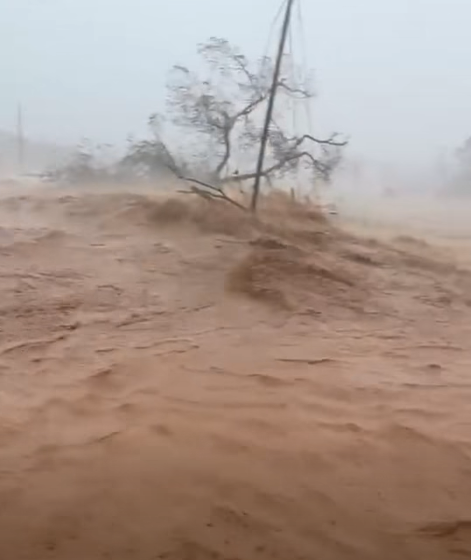
Thunderous torrents of muddy water flow down Santa Cruz Street in Saint Elizabeth, Jamaica during the heart of Hurricane Melissa, October 28, 2025. Courtesy, Eian Thomas via Facebook
Hurricane season has been eerily quiet for us here in Florida, even as a non-tropical system dumped rain amounts this past week onto Central Florida that the National Weather Service described as similar to a hurricane.
Another potentially disastrous Category 5 storm, Hurricane Melissa, made landfall down in the Caribbean last week but didn’t reach the U.S. − the fourth time this season the Sunshine State has escaped catastrophe by the skin of its teeth. Our proximity to the islands and familiarity with the devastation of tropical storms tie together our journeys – with several Jamaican leaders in Florida organizing donation drives to help our neighbors in need. Gallagher Re’s Chief Science Officer Steve Bowen shared further insights from the storm, whose death toll has now reached 60 people in the region:
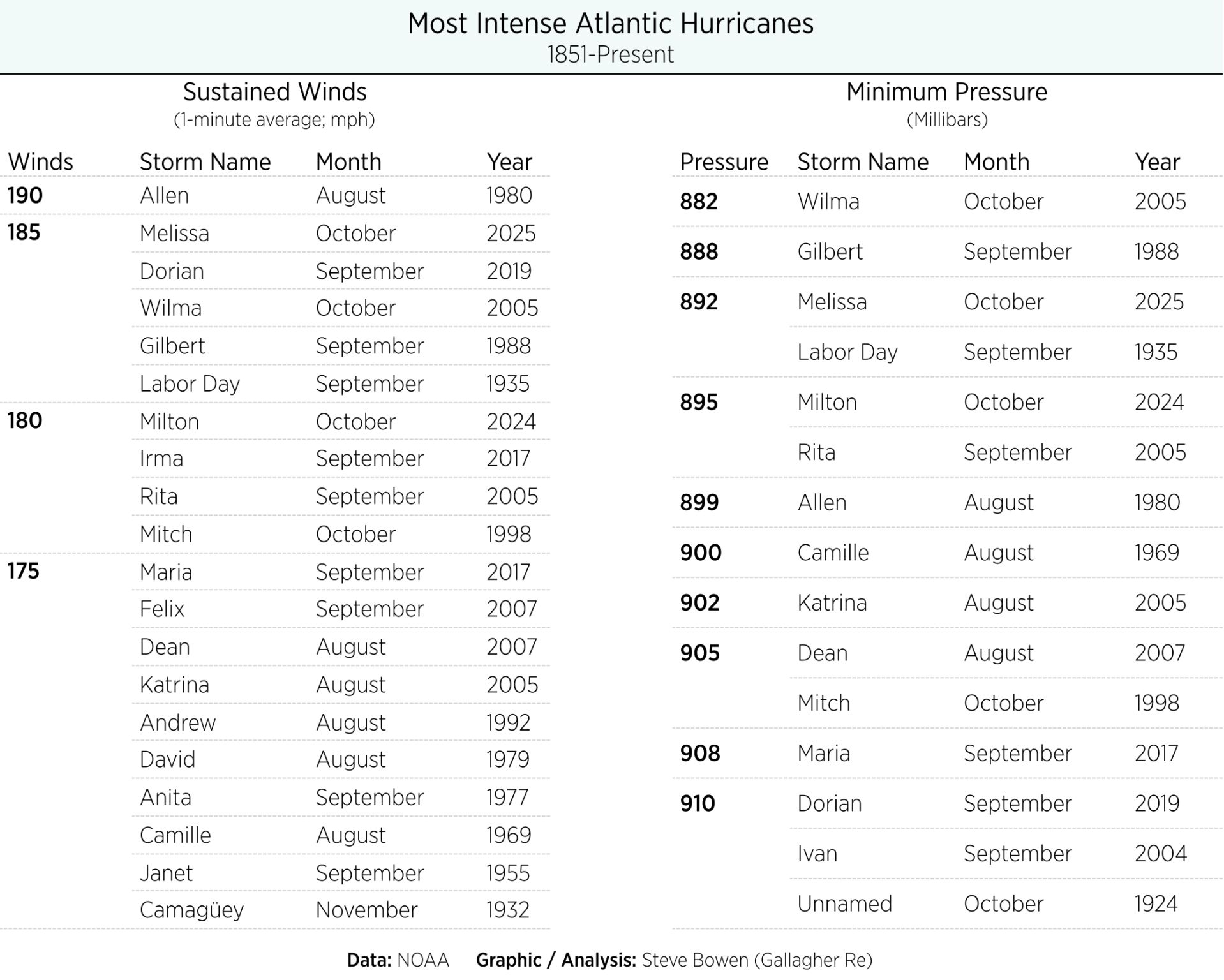
October 28: Hurricane Melissa has made landfall on the island of Jamaica. The monster Category 5 came ashore with 185 mph winds (1-minute sustained average) and a minimum central pressure at 892 millibars. This is the strongest known hurricane to ever make landfall on Jamaica.
This is a generational storm for the island and will be a permanent point of reference across the Caribbean. Jamaicans will need a lot of support (financial, food, clothing, medication, etc.) as the recovery period will be lengthy.
While the island has several financial layers of protection to help bring quick liquidity and crucial disaster recovery funding in the immediate aftermath of Melissa’s landfall, it will likely require more support. The cat bond/parametric policies in place will be a vital lifeline, but not be nearly enough to account for the entirety of the damage. Aid assistance will be critical.
Melissa’s place in history:
– One of 6 known Atlantic storms to reach 185+ mph sustained winds
– One of 4 known Atlantic storms with a minimum pressure of 892 millibars
– Ties as the strongest known Atlantic landfalling hurricane on record (1935 Labor Day & 2019’s Dorian) with 185 mph winds
– Ties as the lowest known minimum pressure for an Atlantic landfall (1935 Labor Day) at 892 millibars2024 and 2025 become the first years in the official Atlantic record book to have back-to-back seasons with a 180+ mph and sub-900 millibar storms.
Melissa becomes the latest example of just storms not only undergoing more extreme rapid intensification, but seeing these rates of strengthening occurring towards the point of landfall. The case of Melissa is particularly shocking since despite the storm’s interaction with Jamaica’s mountainous terrain, the storm just kept on intensifying until it made landfall.
We’ve seen a notable uptick in the rates of explosive intensification (>50 knots / 60 mph in a 24-hour period) across most of the world’s tropical cyclone basins during the past 40+ years, and this aligns with the consensus of scientific research that as the oceans continue to warm, this is providing additional energy to generate and maintain a higher frequency of top tier intensity events.
In short, nature continues to reaffirm the basic laws of thermodynamics.
Steve, who is also a meteorologist, included the table below in his post.
As Melissa cleared Jamaica, minor saltwater flooding was expected across low-lying areas of the Florida Keys, including streets and some storm drains, offshore waters saw tropical storm-force winds, and rip current risks at Orlando-area beaches could last for days.
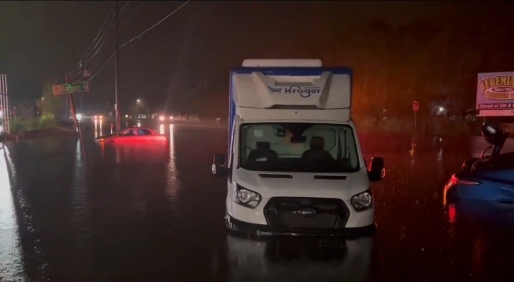
Flooding in the streets of Lake County, Florida from a historic rainfall event, October 27, 2025. Courtesy, Good Morning Orlando
Even though Melissa didn’t reach the U.S. mainland, torrential downpours from a separate storm system wreaked havoc in Central Florida last Monday, dumping almost 20 inches of rain in just 24 hours. Flash floods ensued, cars were stranded in roadways, and ditches became flooded lakes overspilling into surrounding properties. While no injuries or casualties were reported, teams of responders are still out assessing and clearing damage. It was a timely reminder that it doesn’t take a hurricane to wreak havoc here in Florida. If it can rain – it can flood!
Let’s pray for our fellow Floridians and our southern neighbors down in Jamaica and Haiti, and hope that we might get out of the remainder of this hurricane season – designated to end November 30 – unscathed.
 LMA Newsletter of 11-3-25