

Session, surprises nearing
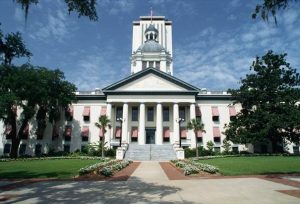 Lawmakers are back in Tallahassee today (February 10) to begin the second of three consecutive weeks of committee meetings leading to the start of the regular 60-day session on March 4. There are new bills to report, including two that undo some key consumer insurance reforms, and a rather startling revelation about asphalt-shingled homes.
One item on this week’s agenda is a series of meetings by four new “combined workgroups” established by House Speaker Danny Perez. Their purpose is to review last session’s $950 million in vetoed budget items by Governor DeSantis and recommend whether the legislature should exercise its power to override any vetoes (which requires a two-thirds majority). During its special session on January 27, the legislature overrode one of the Governor’s vetoes for the first time and reinstated $57 million for legislative operations. Speaking of vetoes, look for the Governor to veto the Trump Act on illegal immigration the legislature passed in that special session instead of taking up the Governor’s own package of bills.
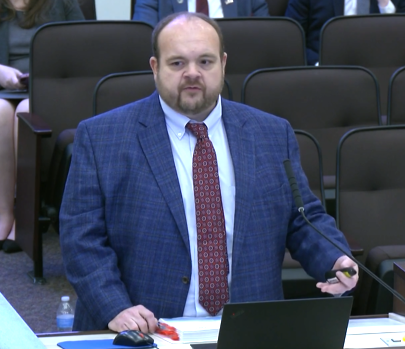
Florida Insurance Commissioner Michael Yaworsky at the Senate Banking and Insurance Committee, February 4, 2025. Courtesy, The Florida Channel
Florida Insurance Commissioner Michael Yaworsky made news last week when he told the Senate Banking and Insurance Committee that ten-year-old asphalt shingle roofs cannot provide full protection against 100 mph winds or stronger. He cited a legislatively-mandated report completed last summer that said Florida roofs beginning at age six years “exhibit higher failure probabilities compared to those without the roof aging effect,” due to “cohesion failure” in the underlying sealant. The report was based on damage from hurricanes Irma, Michael, and Ian and cited tests from the Insurance Institute for Business & Home Safety (IBHS), whose representative backed-up the claim. “For a 10-year-old asphalt shingle roof at 60 mph winds, we can expect a 1-in-12 chance of damage,” said IBHS General Counsel Michael Newman. “At 90 mph winds, we’re talking 25% chance of damage…and at 100-mph winds, we’re talking nearly 100% chance of damage.”
Yaworsky said asphalt shingles make up nearly two-thirds of Florida roofs. He told the committee he’s revising the insurance discount forms to include a mitigation credit for metal roofs, which cost two to three times more than shingles but last up to 50 years. Composite tile roofing materials also hold promise he said. Yaworsky warned the credit could be somewhat offset by the resulting increase in a home’s value and thus insurance premium. There was also some discussion among the committee whether Florida consumers are being deceived by manufacturer claims of 30- and 40-year life shingle roofs under the hot Florida sun. You can read more about the meeting in the Sun-Sentinel and the Palm Beach Post, which includes reaction from the roofing industry.
The Committee also heard a presentation from Florida Emergency Management Chief Kevin Guthrie on the state’s hurricane and flood mitigation programs. That included the effectiveness of the Florida Building Code, which the IBHS estimates saved Florida between $1-3 billion in damage to single-family homes alone in Southwest Florida during 2022’s Hurricane Ian, the costliest in state history.
The insurance committees in the House and Senate are not meeting this week. The Senate Regulated Industries Committee will hold its second panel discussion about issues related to condominiums, including requirements for inspections and structural integrity reserve studies. That’s tomorrow (February 11) from 4-6pm in 412 Knott Building.
I’ve been busy working with the news media. As I told Insurance Insider, I don’t think we’re going to see sweeping changes in insurance this session, saying “I expect a measured approach to determine the effectiveness of what was passed the last couple of years.” And to WMFE-FM, Public Radio for Central Florida: “The legislature would be wise to not entertain passing any laws that would undo the successes of their work for the past 3 years.”
Here is the updated list of legislative bills we’re following. “New” and “Updated” bills are so noted. We will continue to monitor each chamber’s position on relevant bills with likely movement and will add to this list as appropriate. Updates within each bill are noted in blue font:
Property Insurance:
(NEW) Court Judgment Interest Rates and Insurance Reports and Practices ̶ HB 451 by Rep. Alex Andrade (R-Pensacola) and the similar SB 554 by Senator Don Gaetz (R-Pensacola) would essentially undo the 2023 tort reform under HB 837 that eliminated one-way attorney fees for plaintiff attorneys and reverts to something similar to previous attorney fee calculations under SB 76 that were part of the 2021 reforms. HB 451features:
(Section 1) – Increased Judgment Interest Rate – The bill raises the interest rate on court judgments from 400 to 800 basis points.
(Section 2) – Insurance Transparency Reports – The Office of Insurance Regulation (OIR) must compile reports on:
- Business relationships between insurers and related entities that share executives or ownership.
- Executive compensation, detailing salaries, bonuses, and stock options as a percentage of the company’s revenue.
- These reports must be public and cannot be labeled “trade secrets” to avoid disclosure.
(Section 3) – Rate Review Consideration
- The newly required insurance reports from Section 2 will now be factored into the state’s insurance rate approval process.
- Executive compensation and company relationships will be used to determine if rate increases are justified.
(Section 4) – Claims Adjustments and Documentation
- Insurance company adjusters must use electronic estimating software. Deletes the requirement of the DFS emergency rule from October 2024 that public adjusters are subjected to these provisions
- If an adjuster manually changes pricing data, they must:
- Document all modifications.
- Provide explanations for changes.
- Identify who made the changes.
- Retain records for at least seven years.
(Section 5) – Claim Mediation Timeline – Insurers can no longer reinspect a property before a claim becomes eligible for mediation.
(Section 6) – Dispute Resolution & Attorney Fees
- When a policyholder sends a presuit demand, the insurer must either:
- Accept the demand.
- Make a counteroffer.
- Decline the demand.
- Before filing a lawsuit, both parties must go through mandatory mediation, splitting the cost equally.
- Attorney fees in property insurance cases are awarded based on how much the final judgment matches the original demand:
- 80% or more: Claimant gets full attorney fees.
- 20%-80%: Attorney fees awarded proportionally.
- Less than 20%: No attorney fees awarded.
- Exceptions: Attorney fees may still be awarded if:
- The insurer violates deadlines.
- The claimant’s demand is reasonable.
- The court finds bad faith on either side.
(Section 7) – Arbitration Disclosure – If an insurer offers mandatory arbitration with a premium discount, they must clearly show the discount amount in dollars in the policy quote.
(Sections 8, 9, 10) – Technical Adjustments – These sections update cross-references in existing laws to align with the changes introduced in HB 451.
(Section 11) – Effective Date – The bill goes into effect on July 1, 2025.
(NEW) Resolution of Disputed Property Insurance Claims ̶ SB 224 by Senator Tina Polsky (D-Boca Raton) and the identical HB 459 by Rep. Leonard Spencer (D-Winter Garden) requires, rather than authorizes, parties in property insurance claim disputes to participate in mediation. Specifically, it provides:
- Mediation must precede filing a lawsuit
- Parties may mutually agree to conduct mediation by teleconference or other electronic means
- Requires all insureds, or their representatives, to personally attend mediation
- Revises & specifies the costs of mediation, requiring the insurer bear all reasonable costs unless the policyholder fails to appear, and requires each party pay the cost for its own expert or representative
- Requires the policyholder to provide insurer with any information & certain documents within a specified timeframe after mediation is invoked
- Revises conditions under which a policyholder has a certain timeframe to rescind settlement.
The bill comes with an appropriation of $1 million from the Insurance Regulatory Trust Fund to administer its provisions.
Insurance ̶ SB 230 by Senator Keith Truenow (R-Tavares) is the meatiest of all bills filed so far. It would put new restrictions on bad faith claims by first requiring a court ruling and final judgment that an insurance company breached the policy contract before a bad faith claim could be filed. It would also:
- Prohibit a bad faith claim simply because the insurance company paid a claim following a Notice of Intent to Litigate or a demand for judgment;
- Require the plaintiff to cite specific bad faith laws that were allegedly violated;
- Require the plaintiff to note the amount of damages required to cure the violation;
- Require any damages sought to be available under the terms of the insurance policy; and
- Prohibit attorney fees or costs from any damages sought.
The bill is meant to close loopholes identified since the initial bad faith law reforms that were part of the 2022 insurance consumer protections and market reforms. The bill contains other tweaks to current insurance law. It would prohibit public adjusters from engaging in certain adversarial conduct, revise the circumstances under which a carrier or agent may cancel certain policies, and revise the required disclaimer statement on policies that do not provide flood insurance. The bill would also reduce the current coursework requirement from 200 hours to 60 hours to become a general lines insurance agent.
Residential Property Insurers ̶ SB 128 by Senator Danny Burgess (R-Zephyrhills) is meant to give insurance consumers better notification of a policy cancellation, nonrenewal, and rate change by mandating notices be sent by email. Current state law allows emailing such documents only if the policyholder affirmatively elects email delivery, reflecting federal law. We as an industry cannot automatically email someone something, without their prior approval. The bill would also change the timetable for such notifications. Current law requires a 45-day notice for change in premium and 120-day notice for cancelation and nonrenewal. The bill as filed appears to shorten the 120-day notice of cancelation or nonrenewal to 45 days. Look for potential changes to this bill as a result.
Resilience:
(UPDATED) Resilient Buildings ̶ HB 143 by Rep. Webster Barnaby (R-Deltona) and the similar SB 62 by Senator Ana Maria Rodriguez (R-Doral) would authorize owners of resilient buildings to receive a specified tax credit for those improvements and outlines specific LEED (Leadership in Energy and Environmental Design) requirements of a building. The bill also creates the Florida Resilient Building Advisory Council which would work with the Department of Environmental Protection. SB 62 will have its first hearing tomorrow (February 11) at 11am before the Senate Environment and Natural Resources Committee.
(UPDATED) Nature-based Methods for Improving Coastal Resilience ̶ SB 50 by Senator Ileana Garcia (R-Miami) would require the Florida Flood Hub for Applied Research and Innovation to develop guidelines and standards for “green and gray infrastructure” to improve coastal resilience to storms. It would also require the Department of Environmental Protection to adopt rules for nature-based methods for coastal resilience and require a statewide feasibility study with the Department of Financial Services Division of Insurance Agent and Agency Services on the value of applying those methods. SB 50 will have its first hearing tomorrow (February 11) at 11am before the Senate Environment and Natural Resources Committee.
 LMA Newsletter of 2-10-25