

Session preview
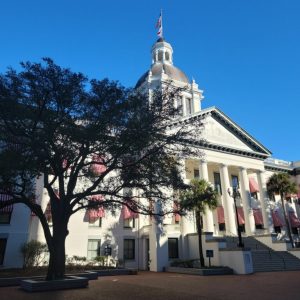 The 160 members of the Florida Legislature return to the Capitol here in Tallahassee next Tuesday (January 13) to begin their scheduled 60-day regular session. Some of the work on issues important to leadership began this past fall during the six staggered weeks of various committee meetings. Those issues include property tax relief, regulation on artificial intelligence (including its use by insurance companies), comprehensive enhanced funding for rural areas, and healthcare modernization. Further property insurance market reforms remain important to House Speaker Daniel Perez, about to begin his final year in the post. But it’s not reflected in Senate President Ben Allbritton’s priorities, nor Governor DeSantis’, who have both voiced ongoing support to let the existing 2022 and 2023 legislative reforms continue to take full effect – and that have shown are working. Florida Insurance Commissioner Michael Yaworsky testified in November that the reforms are working in lowering rates. Nevertheless, there are a series of insurance bills filed this session, which we’ve detailed in this Bill Watch.
For those of you who didn’t get a chance to read our report on the Florida Insurance Guaranty Association (FIGA) Board meeting a few weeks ago, its General Counsel Tim Meenan said the Office of Insurance Regulation (OIR) continues to work on legislation to modernize the law regarding reciprocals, noting the original statute dates back to the 1940’s or ‘50’s. “They’re essentially trying to bring together the regulatory powers that they have for a stock company and want to make sure they have the same powers for a reciprocal,” he explained, noting that if a reciprocal were to go insolvent, its claims would come to FIGA for payment. He said the bill is being redrafted and has not yet been filed.
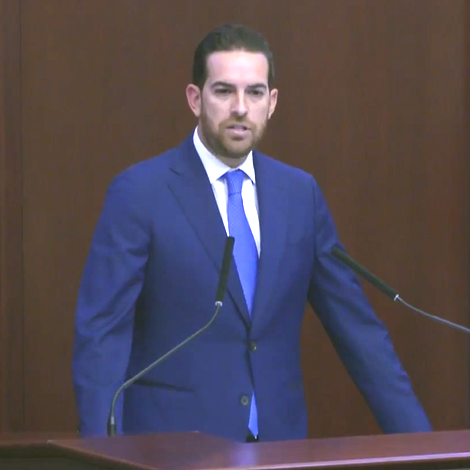
House Speaker Daniel Perez, April 24, 2025. Courtesy, The Florida Channel
Meenan said he expects that same bill will have language sought by Commissioner Yaworsky to further define what is a fair and reasonable business arrangement between an insurance company and its affiliates. Florida Statute references “fair and reasonable” but Meenan said there’s no standard to define it, and noted there is an NAIC model act but that requirements for a catastrophe-prone state such as Florida might be different than an inland state. He referenced last year’s debate in the legislature on whether or not insurance companies are being unfair or unreasonable in their financial relationships with their affiliates. While the topic didn’t emerge in the fall legislative committee meetings, “the (House) Speaker is adamant about it, so possibly we’ll see some of that legislation kind of clamping down on those agreements get filed. There is a lot of thought that the Senate doesn’t have an appetite to deal with insurance, but let the (2022-2023) reforms continue working,” Meenan said. He also noted discussion in the Florida Senate that could result in the legislature getting involved in regulating attorneys. “(There’s a) big discussion in the Senate… they believe that the Florida Bar has given out the idea that the legislature can get involved in partially or completely regulating the conduct of attorneys. And if that’s the case, there could be a bill coming.”
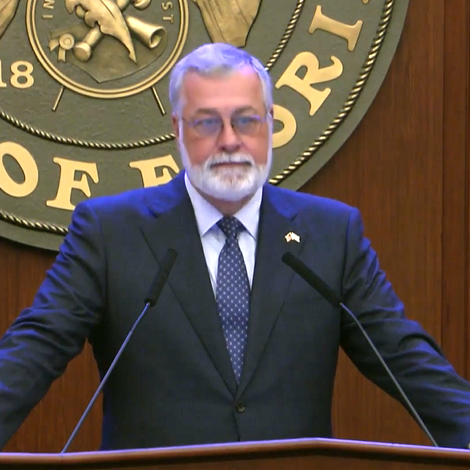
Senate President Ben Albritton, April 24, 2025. Courtesy, The Florida Channel
Florida CFO Blaise Ingoglia’s legislative priorities include forcing insurance companies to accept fault if an illegal immigrant policyholder is involved in a car accident, and removing illegal aliens as covered employees under workers’ compensation insurance laws. He also released his legislative proposals to standardize transparency and accountability across local governments.
Meanwhile, four proposed constitutional amendments to reduce property taxes for homeowners continue moving forward in the Florida House, although there have been concerns voiced about how they could impact local government funding and services. The Governor has made clear he’d like to eliminate property taxes altogether, has called for a special session to be held after the regular session’s scheduled adjournment March 13, and said the House measures don’t go far enough. Senate President Albritton has said his chamber is not currently working on the issue as it awaits further guidance from the Governor. An economic analysis from Realtor.com projects eliminating homesteaded property taxes would raise property values in Florida by 7%-9%, which has implications for property insurance. One of the four proposed amendments (HJR 209) would increase by $100,000 the exemption for homestead property from all ad valorem taxes other than school district taxes, so long as the home has property insurance.
The House leadership made it a priority, passing it in committee last month, and it’s now ready for a vote by the full House – which will then force the Senate to take it up or ignore it. Speaker Perez has also announced a major healthcare initiative to modernize Florida’s healthcare system, expand access to care, and lower costs, in concert with President Trump’s actions.
In the Senate, the priority has been President Albritton’s Rural Renaissance Legislation, which would expand programs and funding in rural counties for infrastructure projects, economic development, housing, and healthcare. It was likewise passed in committee last month and is ready to go to the full Senate during the first week of this session – and then on to the House for consideration.
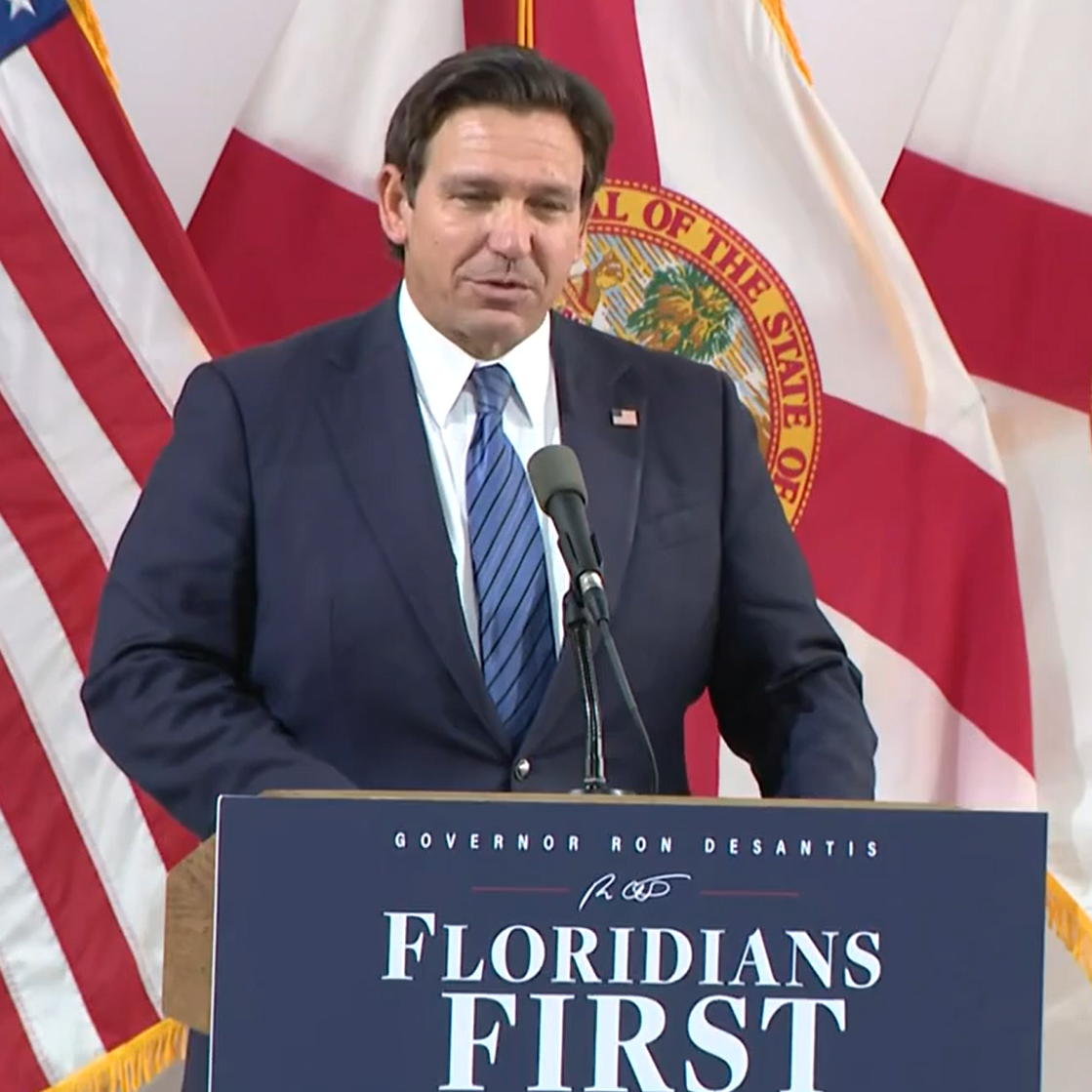
Governor Ron DeSantis announces his recommended 2026-2027 state budget, December 10, 2025. Courtesy, The Florida Channel
You can also expect the legislature to deal with new bills that would change the employment landscape, as reported by Gulfshore Business. These include bills that could loosen minimum wage requirements, block undocumented workers from jobs, and protect medical marijuana patients on the job.
The only bill that the legislature is required by law to pass each year is an appropriations bill for the next fiscal year budget that begins July 1. Governor DeSantis last month released his recommended budget, coming in at $117.4 billion, more than $1 billion higher than his recommended budget was for the current fiscal year. The Legislature’s approved a budget for the current fiscal year of $115 billion.
The deadline for filing bills is this Friday, January 9. Here is the list of legislative bills filed this session that we’re following so far. Recent updates within each bill are noted in blue font:
Property Insurance – Claims & Litigation
HB 459 Property Insurance Claims by Rep. Randy Maggard (R-Dade City), the comparable SB 108 by Sen. Tina Polsky (D-Boca Raton), and HB 341 by Rep. Leonard Spencer (D-Gotha) establishes a mandatory procedure for resolution of disputed property insurance claims; requires insurers to notify policyholders of the mandatory procedure; requires DFS to prepare a consumer information pamphlet to be provided to policyholders; authorizes a policyholder or insurance company to file a petition with the Division of Administrative Hearings to resolve certain claims; specifies that parties to a claim must bear the cost of certain conferences; requires an administrative law judge to dismiss petitions that do not contain specified information; requires that petition include certain certification; specifies that dismissal of petition or portion of petition is without prejudice and does not require hearing; requires an insurance company to pay a requested claim or file a response to a petition within a specified timeframe; requires an administrative law judge to make a final determination of the total coverage amount within a specified timeframe; and requires such amount to be paid in a specified manner. It includes a $1 million appropriation. HB 459 is awaiting its first hearing before the House Insurance & Banking Subcommittee, as is HB 341. SB 108 is awaiting its first hearing before the Senate Banking and Insurance Committee.
SB 202 Mandatory Human Reviews of Insurance Claim Denials by Sen. Jennifer Bradley (R-Fleming Island) and the comparable HB 527 by Rep. Hillary Cassel require that insurance companies’ decisions to deny a claim or any portion of a claim be made by qualified human professionals; prohibit the use of algorithms, artificial intelligence, or machine learning systems as the sole basis for determining whether to adjust or deny a claim; and authorize the Office of Insurance Regulation to conduct market conduct examinations and investigations under certain circumstances, among other measures.
The Florida House Subcommittee on Insurance & Banking met October 7, 2025, to examine how insurance companies are using artificial intelligence (AI) in their operations. A panel of insurance and technology experts representing CFO Ingoglia’s office, NAMIC, APCIA, FIC and Insurtech told lawmakers that insurers use AI sparingly and primarily for efficiency, accuracy, fraud detection, and faster claims handling—not to make final claims decisions. They emphasized that existing laws already hold insurers accountable for any AI-assisted decisions and that AI cannot replace human oversight. You can read more here.
During the November 19, 2025 meeting of the Senate Banking and Insurance Committee, Insurance Commissioner Yaworsky told lawmakers that “responsible AI governance is crucial. I’m not an opponent of AI, but I do think it needs to be responsibly deployed. There are some companies that I think are doing it in a much more responsible manner than others.” Yaworsky told the committee that his focus in on disclosure when AI is being used, in auditing, and assurances that insurance companies have a “human in the loop that knows what that system is doing, has expertise on that.” As for the Senate bill that had been filed at that point, Yaworsky told Senators “We don’t view it as a necessary benefit to eliminate the use of AI. That’s a legislative decision to make. But we do want to provide a path where, if it is being used, it is being used responsibly, known to the regulator.”
The Florida House devoted the final committee week in December to proposed AI legislation. HB 527 unanimously passed the House Insurance & Banking Subcommittee on December 9 and awaits a final hearing before the Commerce Committee, where if successful, will then go to the House floor. You can read more here. SB 202 is awaiting its first hearing before the Senate Banking and Insurance Committee.
On broader AI issues, Sen. Tom Leek (R-Ormond Beach) has filed SB 482, the “Artificial Intelligence Bill of Rights,” that goes beyond simply targeting insurance practices to address a variety of ways that AI may impact our lives. It follows the Governor’s Proposal for Citizen Bill of Rights for Artificial Intelligence that includes data privacy, parental controls, consumer protections, and restrictions on AI use of an individual’s name, image or likeness without consent. It would also prohibit utilities from charging Florida residents more to support hyperscale data center development, including electric, gas, and water utilities. It all comes after President Trump announced plans for an executive order to curb state power over AI regulation in the U.S.
HB 341 Resolution of Disputed Property Insurance Claims by Rep. Leonard Spencer (D-Gotha), the similar SB 108 by Sen. Tina Polsky (D-Boca Raton), and the comparable HB 459 by Rep. Randy Maggard (R-Dade City) requires parties in a property insurance claim dispute to participate in mediation; provides that mediation is a condition precedent to commencing litigation; provides that parties may mutually agree to conduct mediation by teleconference or other electronic means; requires all insureds, or their representatives, to attend mediation; revises and specifies duties relating to bearing certain costs of mediation; and provides an appropriation. HB 341 is awaiting its first hearing before the House Insurance & Banking Subcommittee, as is HB 459. SB 108 is awaiting its first hearing before the Senate Banking and Insurance Committee.
HB 427 Public Adjuster Contracts by Rep. Lauren Melo (R-Naples) and the identical SB 266 by Sen. Colleen Burton (R-Lakeland) authorize certain persons to rescind a contract for public adjuster services; and clarify acts that may subject a public adjuster or public adjuster apprentice to discipline. HB 427 is awaiting its first hearing before the House Insurance & Banking Subcommittee. SB 266 is awaiting its first hearing before the Senate Banking and Insurance Committee.
SB 140 Whistleblower Protections for Employees and Independent Contractors of Property Insurers by Sen. Darryl Rouson (D-St. Petersburg) prohibits property insurers, or their agents or affiliates, from taking adverse actions against employees or contractors for specified reasons; and authorizes such employees or contractors to bring a civil action within a specified timeframe, among other measures. SB 140 is awaiting its first hearing before the Senate Banking and Insurance Committee. There is no companion bill in the House as of this Bill Watch.
Property Insurance – Regulation
HB 99 Reinsurance Intermediary Managers by Rep. Richard Gentry (R-Astor) and the identical SB 394 by Sen. Tom Leek (R-Ormond Beach) revise the definition of the term “reinsurance intermediary manager” to exclude certain underwriting managers. HB 99 is awaiting its first hearing before the House Insurance & Banking Subcommittee. SB 394 is awaiting its first hearing before the Senate Banking and Insurance Committee.
SB 582 Required Reports of the Office of Insurance Regulation by Sen. Don Gaetz (R-Niceville) requires OIR to create specified reports on insurance companies, licensees, registrants, and their related entities, including the compensation of their executive officers; requires OIR to use a reliable and up-to-date methodology and software to create specified reports and review such methodology and software for accuracy; and specifies that certain data are not considered trade secrets and may be used for certain purposes, among other measures. FIGA’s Tim Meenan notes the bill “would require regulators collect annual compensation, including stock options, and publish a report on it and use the information, along with actuarial science, in rate filings to determine a carrier’s rate.” SB 582 is awaiting its first hearing before the Senate Banking and Insurance Committee. There is no companion bill in the House as of this Bill Watch.
SB 808 Roofing Requirements for Property Insurance by Sen. Corey Simon (R-Tallahassee) and the identical HB 815 by Rep. Michael Gottlieb (D-Davie) revise the definition of the term “authorized inspector” to include certain roof consultants and roof observers; prohibit an insurance company from refusing to issue or renew a property insurance policy on a residential structure that has a roof less than a specified age solely because of the roof’s age; and prohibit an insurance company from refusing to issue or renew a property insurance policy under certain circumstances, among other measures. SB 808 is awaiting its first hearing before the Senate Banking and Insurance Committee. HB 815 has not received committee assignments as of this Bill Watch.
SB 832 Residential Property Insurance by Sen. Bryan Avila (R-Miami Springs) and the similar HB 767 by Rep. Yvette Benarroch (R-Surfside ) requires that certain rate filings with the Office of Insurance Regulation from residential property insurance companies include rate transparency reports; requires OIR to establish and maintain a comprehensive resource center on its website; specifies that certain information is not a trade secret and is not subject to certain public records exemptions; prohibits an insurance company from including the value of certain land when establishing a coverage amount or adjusting certain claims, among other measures. SB 832 is awaiting its first hearing before the Senate Banking and Insurance Committee. HB 767 has not received committee assignments as of this Bill Watch.
Property Insurance – Mitigation & Resilience:
SB 434 Assessment of Property Used for Residential Purposes by Sen. Tom Leek (R-Ormond Beach) and the identical HB 617 by Rep. Toby Overdorf (R-Stuart) define the term “changes or improvements made to improve the property’s resistance to wind damage;” and prohibits the consideration of the increase in just value of a property which is attributable to changes or improvements made to improve the property’s resistance to wind damage in determinations of the assessed value of certain property, among other measures. SB 434 is awaiting its first hearing before the Senate Finance and Tax Committee. HB 617 is awaiting its first hearing before the House Ways & Means Committee.
SB 840 Land Use Regulations for Local Governments Affected by Natural Disasters by Sen. Nick DiCeglie (R-Indian Rocks Beach) would throttle-back the scope of SB 180, passed in the 2025 session, that limited post-hurricane land use actions by local governments and has been the subject of subsequent lawsuits. SB 840 clarifies the one-year moratorium on local governments from actions that prevent or delay the repair or reconstruction of hurricane damaged buildings, allowing it only for the purpose of addressing stormwater, flood water management, potable water supply, or necessary repairs or replacement of sanitary sewer systems. The bill keeps the temporary ban that’s in place until June 2026 on “more restrictive and burdensome” planning and land use changes by local governments impacted by the 2024 hurricanes. Among other provisions and clarifications, the bill updates SB 180 to reflect that in the future, local governments may pass tougher building codes for new development but it keeps the one-year block on any new codes that would impact properties being rebuilt after hurricane damage. SB 840 is awaiting its first hearing before the Senate Community Affairs Committee. There is no companion bill in the House as of this Bill Watch.
Property Insurance – Citizens Property Insurance Corporation:
SB 634 Rates for Citizens Property Insurance Corporation Coverage by Sen. Nick DiCeglie (R-Indian Rocks Beach) and the identical HB 275 by Rep. Daniel Alvarez (D-Kissimmee) provide that the limitations on the required annual rate increases for Citizens Property Insurance Corporation coverage do not apply to new policies issued by the corporation on or after a specified date and to subsequent renewals of such policies. SB 634 is awaiting its first hearing before the Senate Banking and Insurance Committee. HB 275 is awaiting its first hearing before the House Insurance & Banking Subcommittee.
HB 943 Citizens Property Insurance Corporation by Rep. Mike Redondo (R-Miami) and the identical SB 1028 by Sen. Joe Gruters (R-Sarasota) furthers the effort to shrink Citizens’ policy count. It requires Citizens to implement a commercial lines clearinghouse to complement its existing personals lines clearinghouse; authorizes approved surplus lines clearinghouse insurers to participate in it; prohibits such insurers from participating in the personal lines clearinghouse; specifies that participation in the program is not mandatory for such insurers; specifies circumstances under which Citizens policyholders are not eligible for commercial lines residential coverage with Citizens; authorizes applicants or insureds to elect to accept coverage with specified insurers or elect to accept or continue coverage with Citizens; requires certain applicants & policyholders to pay specified premium for Citizens’ coverage; revises rights & authorizations for certain independent insurance agents; and removes the prohibition relating to commercial nonresidential policies. HB 943 and SB 1028 were filed on December 30, 2025 and have not received committee assignments as of this Bill Watch.
HB 909 Coverage by Citizens Property Insurance Corporation by Rep. Jim Mooney, Jr. (R-Islamorada) and the identical SB 1024 by Sen. Ana Maria Rodriguez (R-Doral) would impact Citizens policyholders in areas of Miami-Dade and Monroe Counties, where the Florida Office of Insurance Regulation has determined there’s not a reasonable degree of competition for property insurance – essentially meaning that Citizens Insurance is the only option. With that determination, the bill would limit Citizens’ rate increases to no more than 10% annually in those areas and excuse policyholders from Citizens mandatory flood insurance requirement if the property is in a FEMA X-zone or is elevated at least one foot above base flood elevation. Citizens flood insurance mandate is ongoing. Beginning in 2026, homes with values of $400,000 or greater will be required to have it and then by 2027, all Citizens policies. HB 909 and SB 1024 were filed on December 29, 2025 and have not received committee assignments as of this Bill Watch.
Other Bills We’re Monitoring:
These bills will face challenges in the legislative process and we’ll report relevant updates only as they may occur. With the exception of SB 78, all are awaiting their first committee hearing, a necessary step to progress through the process:
SB 30 Rate Filings for Property Insurers by Sen. Barbara Sharief (D-Miramar) revises the powers of the insurance consumer advocate; specifies that a failure to obey certain court orders may be punished as contempt; authorizes a circuit court to order a person to pay certain expenses; and prohibits the Office of Insurance Regulation from approving certain rate filings, among other measures. There is no companion bill in the House as of this Bill Watch.
SB 78 Home Hardening Products by Sen. Rosalind Osgood (D-Fort Lauderdale) and the similar HB 185 by Rep. Lisa Dunkley (D- Fort Lauderdale) provide a sales tax exemption for home hardening products used on eligible residential property; specify a limitation on exemptions; require property owners to submit an application to the Department of Revenue in order to be eligible; and provide requirements for the department in issuing refunds. SB 78 unanimously passed the Community Affairs Committee as a committee substitute bill and awaits its next hearing before the Finance and Tax Committee, the second of three scheduled committee stops.
SB 128 Homeowners’ Insurance Policies by Sen. LaVon Davis (D-Ocoee) requires insurance companies to reimburse homeowners for the cost of a specified roof inspection under certain circumstances; and requires companies to make certain notifications to homeowners at a specified time, among other measures. There is no companion bill in the House as of this Bill Watch.
SB 160 Emergency Residential Property Insurance Assistance Trust Fund/Department of Financial Services by Sen. Tracie Davis (D-Jacksonville) creates the Emergency Residential Property Insurance Assistance Trust Fund within the Department of Financial Services; provides eligibility for financial assistance from the trust fund; provides for funding and administration of the trust fund; and provides for future review and termination or re-creation of the trust fund. There is no companion bill in the House as of this Bill Watch.
HB 195 Payment Scam Task Force by Rep. Jervonte Edmonds (D-West Palm Beach) and the similar SB 570 by Sen. Tina Polsky (D-Boca Raton) create a Task Force on Payment Scams adjunct to the Department of Financial Services (DFS); requires DFS to provide administrative and staff support relating to the task force; requires Florida’s CFO to establish the task force by a specified date; provides the task force’s purpose; provides memberships & terms; provides that members serve without compensation but are entitled to per diem & travel expenses; provides requirements for meetings; provides duties of the task force; provides reporting requirements; and provides for future repeal and legislative review of the task force.
SB 230 Transparency in Insurance Matters by Sen. Carlos Smith (D-Orlando) defines the term “trade secret;” revises the requirements of a notice of trade secret submitted to the Office of Insurance Regulation or the Department of Financial Services; specifies that certain information is not a trade secret and is subject to public disclosure; requires OIR to review all claims of trade secret protection; requires that fees, commissions, and profit-sharing agreements between insurance companies and their affiliates be filed with OIR and made publicly accessible on the DFS website, among other measures. There is no companion bill in the House as of this Bill Watch.
SB 234 Insurers’ Financial Transactions by Sen. Carlos Smith (D-Orlando) requires certain insurance companies to annually provide specified information to the Office of Insurance Regulation; requires OIR to contract annually with a specified entity to conduct a review of certain transactions; prohibits an insurance company from engaging in certain transactions with affiliates; and prohibits a company from declaring or paying dividends to shareholders or issuing executive bonuses under certain circumstances, among other measures. There is no companion bill in the House as of this Bill Watch.
HB 343 Insurance Solutions Advisory Council by Rep. Leonard Spencer (D-Gotha) and the similar SB 84 by Lori Berman (D-Boynton Beach) create an advisory council within the Florida Office of Insurance Regulation (OIR) to analyze and compile available data and evaluate relevant and applicable information relating to Florida’s property and automobile insurance market; provide for membership of the advisory council; provide for per diem and travel expenses; provide for council meetings; require OIR to provide the advisory council with staffing and administrative assistance; require the advisory council to submit a specified report annually; and provide for future legislative review and expiration of advisory council.
SB 366 Initiating a Property Insurance Interstate Compact by Sen. Mack Bernard (D-Boynton Beach) and the identical HB 319 by Rep. Kelly Skidmore (D-Boca Raton) require the insurance commissioner to initiate a compact with other states to establish a national risk pool for property insurance for natural disasters for a specified purpose; and require the commissioner, as soon as feasible, to enter into the compact with a minimum number of member states. The idea behind it is explained in this Florida Politics article.
HB 649 Property Insurer Financial Strength Ratings by Rep. Kevin Chambliss (D-Miami) requires certain annual insurance reports prepared by the Office of Insurance Regulation (OIR) for the legislature and Governor to include financial strength ratings of property insurance companies against which delinquency and similar proceedings were instituted; and requires OIR to maintain and make available upon request information relating to financial strength ratings of property insurers. There is no companion bill in the Senate as of this Bill Watch.
 LMA Newsletter of 1-6-26