

New tracker shows housing shortages
Florida’s housing supply is finally easing after years of growth, an interactive tracking map is providing a better understanding of the housing shortage in areas of Florida, and the world’s largest retirement community is doing its part by announcing development of more than 2,800 new homes. It’s all in this week’s look at Florida economic news.
 Florida Housing Market: The total number of homes on the market in the Sunshine State is finally on the decline after two years of increases − down 2% from its peak in early August as sellers continue to remove listings from the market. Paradoxically enough, lower demand has led to lower inventory for Florida homes. A series of posts on X from Mike Simonsen, Founder and CEO of Altos Research, further explained the downward trend as a confluence of several factors dying down: low borrowing costs, remote work surges, and people flocking to Florida in droves over the last several years − all have changed direction. The change isn’t just a seasonal trend like we might expect this time of year. “I think it’s very notable that Florida didn’t have any seasonality whatsoever for two full years. One hundred and ten weeks where inventory just climbed,” Simonsen told Newsweek. “So the fact that a ‘seasonal’ decline in inventory even happened this year is a change.” Other experts think that inventory might continue to drop before it reaches an equilibrium point, and with de-listings in August 2025 up 60% year-over-year in Florida, it’s looking like “if you don’t have to sell, you’re not,” added Simonsen. It’s worth noting that for Miami-Dade and Broward condo and single-family home owners, the opposite has been true, with a year-over-year growth on display.
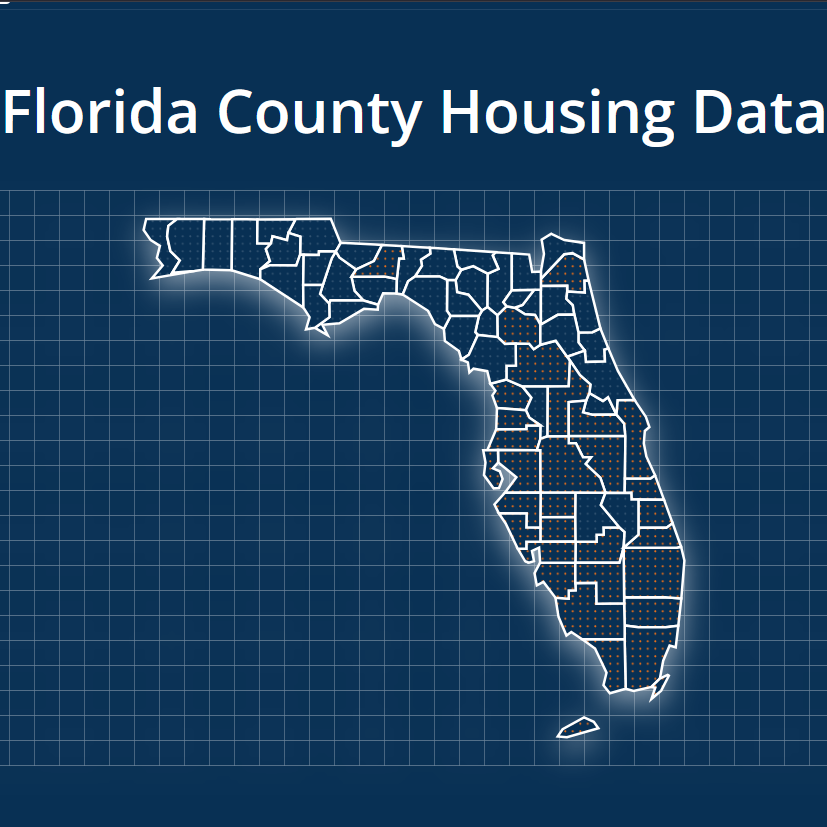 Housing Tracker: While the overall housing demand is on the downtrend, according to The Florida Housing Data Project, the market needs around 55,000 single family homes and 60,000 rental units to pop up, and fast. The project includes a new interactive map developed by housing economists from the DeVoe L. Moore Center at Florida State University and think tanks the Florida Policy Project and Reason Foundation. The project places the blame for the housing gap on several factors: permitting delays, restrictive zoning, and political gridlocks stopping the adoption of flexible housing solutions. These problems are most acute in metro areas like Miami-Dade, Fort Lauderdale, and Tampa, ranked as some of the least affordable housing markets in the nation. This map should allow for leaders and policymakers to get a much clearer picture on how housing shortages hamstring their communities, causing a barrier for attracting new workers, pushing families further outside the cities where they work, and creating more tradeoffs between housing and other facets of life. To quote directly from The Florida Housing Data Project, “fixing Florida’s broken housing system is no longer optional.”
 The Villages Grow Again: Northwest of bustling Orlando lies The Villages, the famous 57,000-acre retirement community, and they have a plan to help address some of the housing shortage. Just recently, the community decided to use municipal-bond investors to expand even further, inking a $130 million high-yield debt deal to build 2,800 new homes in the megaplex. The Villages is part of the fastest growing metro area in the US, and they expect their population to grow by 60%, up to 260,000 by 2045, in line with the aging U.S. population, which necessitates new housing. While the unrated bonds are risky, between the volatile senior living and real estate muni markets, scale and city planning are on their side. The expansion is next to already attractive communities, complete with 60 golf courses, town squares, resident social clubs, and hundreds of miles of golf-course paths. The permits are all handled, and the demand is more than apparent, which should help offset some of the financial risks of the debt. “Variations of the Villages credit have been in the market for a while so people know it well. Due to the familiarity, as long as it is priced appropriately, they should be able to find sufficient demand,” said Daniel Solender, head of municipal investments at Lord Abbett & Co., in an interview with Bloomberg.
 LMA Newsletter of 11-3-25