

Plus, another attempt to eliminate Risk Rating 2.0
 Florida’s emergency fund is checked by the House, FEMA puts up money for Hurricane Milton repairs to Tropicana Field, and eight GOP senators lead another charge to scrap FEMA’s Risk Rating 2.0 flood insurance pricing program. It’s all in this week’s Disaster Management Digest.
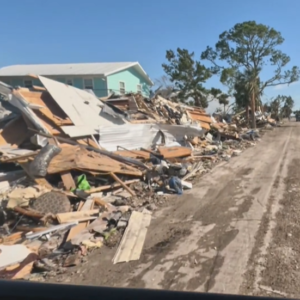
Hurricane Helene damage at Horseshoe Beach, FL
Emergency Funding: A new proposal from the Florida House was filed late Thursday, with the goal of reining in Governor DeSantis’ emergency spending powers – specifically to stop spending hundreds of millions from the state’s Emergency Preparedness and Response Fund on immigration enforcement. With the Response Fund set to expire on Monday, the timing of the bill could not be more pertinent, extending the multi-billion-dollar trust fund through 2030 but limiting its use to “natural emergencies,” as defined in s. 252.34(8), “an emergency caused by a natural event” via new reporting and oversight measurements. This would seemingly exclude disasters such as a terrorist attack or the tragic Surfside condo collapse from eligibility. It would also reroute any federal reimbursements through the legislature’s general revenue fund, not the emergency fund, including the $608 million in reimbursements promised from the Trump Administration for Florida’s immigration efforts. Earlier last week, the Senate passed SB 7040 to simply extend the fund through December 2027 with no restrictions, which the House refused to consider. This latest Republican-led House proposal is very similar to measures Senate Democrats unsuccessfully tried to add to SB 7040, showing a collective effort to guardrail spending with legislative controls.

St. Petersburg’s Tropicana Field had its fiberglass roof shredded by Milton’s winds
Tropicana Field Repairs: More than a year after Hurricane Milton’s winds shredded Tropicana Field’s fiberglass roof, FEMA has reimbursed $16.5 million for repairs made to the St. Petersburg baseball stadium as a part of the larger $480 million federal package for Florida’s more than 500 recovery projects. St. Petersburg Assistant City Administrator Tom Greene called the funding “an extremely promising step in the process,” with the $16.5 million covering all estimated costs to date less the $10.8 million in insurance payouts. The city is expecting to receive another $2.75 million from the state, based on federal/state cost sharing. The city approved nearly $60 million for repairs, which included replacing the roof with thicker PTFE panels designed to withstand higher winds. In the meantime, other repairs are being made, including turf installation, a new video board, and repairs to the team offices to get everything ready for opening day on April 6 and the Rays’ return to Tropicana. They played last year at Tampa’s Steinbrenner Field.
 Ridding Risk Rating 2.0: A group of eight GOP senators has drafted another letter to FEMA, again asking to do away with the National Flood Insurance Program’s (NFIP) Risk Rating 2.0, claiming their constituents pay much higher rates under the new system, which prices risk to the specific property. Championed by coastal Senator Bill Cassidy (R-LA), the request comes at a time when the NFIP is still reliant upon short-term extensions from Congress, and many, especially in Sen. Cassidy’s home state, have begun to opt out of flood coverage altogether. The eight senators write that “approximately 77% of policyholders pay more than under the previous system,” and cited a December 2025 study in the Journal of Catastrophe Risk and Resilience which found that since Risk Rating 2.0 began in 2021, there has been an 11% to 39% decline in new NFIP policies and a 5% to 13% drop in existing policies. Adamant that a broad risk pool is one of the core tenants of the program, the senators contend that as policyholders drop out, the risk becomes more severe. But there are conflicting accounts of the change in NFIP pricing. Supporters claim the new system is now actuarily sound, and a 2023 update from the American Flood Coalition found that 89% of NFIP policyholders were paying less or seeing increases of $10 or less per month on a national basis. FEMA seems to be sticking to its guns, saying its new pricing better reflects the flood risk on an individual property basis, and helps the NFIP better manage the $20.5 billion in debt it carried as of July 2023.
 LMA Newsletter of 2-17-26