

Funding for infrastructure, homes
 Florida’s rural counties hit hard by the 2024 hurricanes get needed infrastructure improvement funding, St. Petersburg talks phase two of its hurricane rebuilding, and a Southwest Florida fire station wiped-out in 2022’s Hurricane Ian is back in service with help from FEMA. It’s all in this week’s Disaster Management Digest.
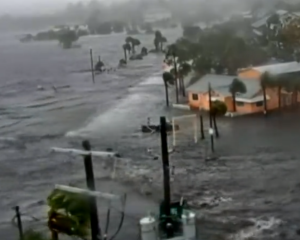
Hurricane Idalia’s storm surge washes through Steinhatchee, August 30, 2023. Courtesy, WCJB-TV.
$168 Million to Rural Communities: Rural communities across Florida have been hit hard by the last few hurricanes. Towns like Perry, which saw extensive damage from Hurricanes Idalia and Helene, are now getting a lifeline from the state’s Community Development Block Grant Disaster Recovery and the Rural Infrastructure Fund. Taylor County, where Perry is located, got the biggest slice of the pie with $36 million: $12 million for a new parallel treatment train, $8.5 million for new wastewater infrastructure, $4.5 million for an independent water source, and $4.4 million to Perry’s Doctors’ Memorial Hospital to overhaul facility infrastructure. Farther south along Route 19/98 in Cross City, $32 million was awarded for a new wastewater treatment plant and an additional $5.7M to upgrade stormwater drains. These infrastructure improvements are meant to help rural communities better withstand future storms.
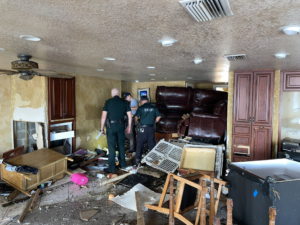
Hundreds of homes in St. Petersburg suffered flood damage from Hurricane Helene’s 10-15 foot storm surge. Courtesy, Pinellas County Sheriff’s Office
St. Petersburg Disaster Recovery Plan: St. Petersburg is rolling out phase two of its $160 million disaster recovery plan to help residents rebuild or relocate from 2024’s hurricanes Helene and Milton. City staff recently revealed qualifications for the program, saying that further delays are likely, due to the number of homeowners who still need help some 15 months after the storms. The biggest surprise to housing officials was reconstruction counts. Most assumed the applications would be for reimbursement once jobs were completed; instead, they found many homeowners were struggling to get even the first steps of the process underway. Officials anticipated 98 households would need help and received 466 requests. The program includes a $5 million property buyout program, where the city is purchasing 14 of the highest flood-risk properties damaged by the storms, and converting them either to open space or flood mitigation projects. Exact details and eligibility requirements must still be approved by the city council.
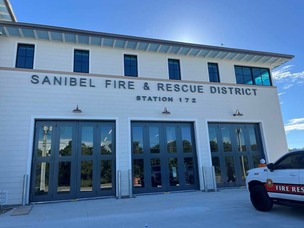
The new Sanibel Fire & Rescue Station #172. Courtesy, FEMA
Sanibel Fire Station Support: More than three years after Hurricane Ian devastated Fire & Rescue Station 172 on Sanibel Island, the crews are back into a new building, thanks to funding from the state of Florida and FEMA funding. The two-story station features drive-through apparatus bays, reinforced slab work, accessibility ramps, drainage improvements, and building elevation well above previous flood levels. All in all, Station 172 is a beacon of hope for the community, reinforcing trust in emergency response for the west side of the island, and showing the power of recovery in the face of major setbacks coupled with resilience against future storms.
 LMA Newsletter of 2-2-26