

Plus, the new drought and sinking skyscrapers
 Governor DeSantis pushes back against federal plans to allow oil drilling off of Florida’s Gulf Coast, Tallahassee finds itself the drought capital of the nation, and sinking residential towers on barrier islands are spelling problems for many South Florida properties and high-rises. It’s all in this week’s Environmental and Engineering Digest.
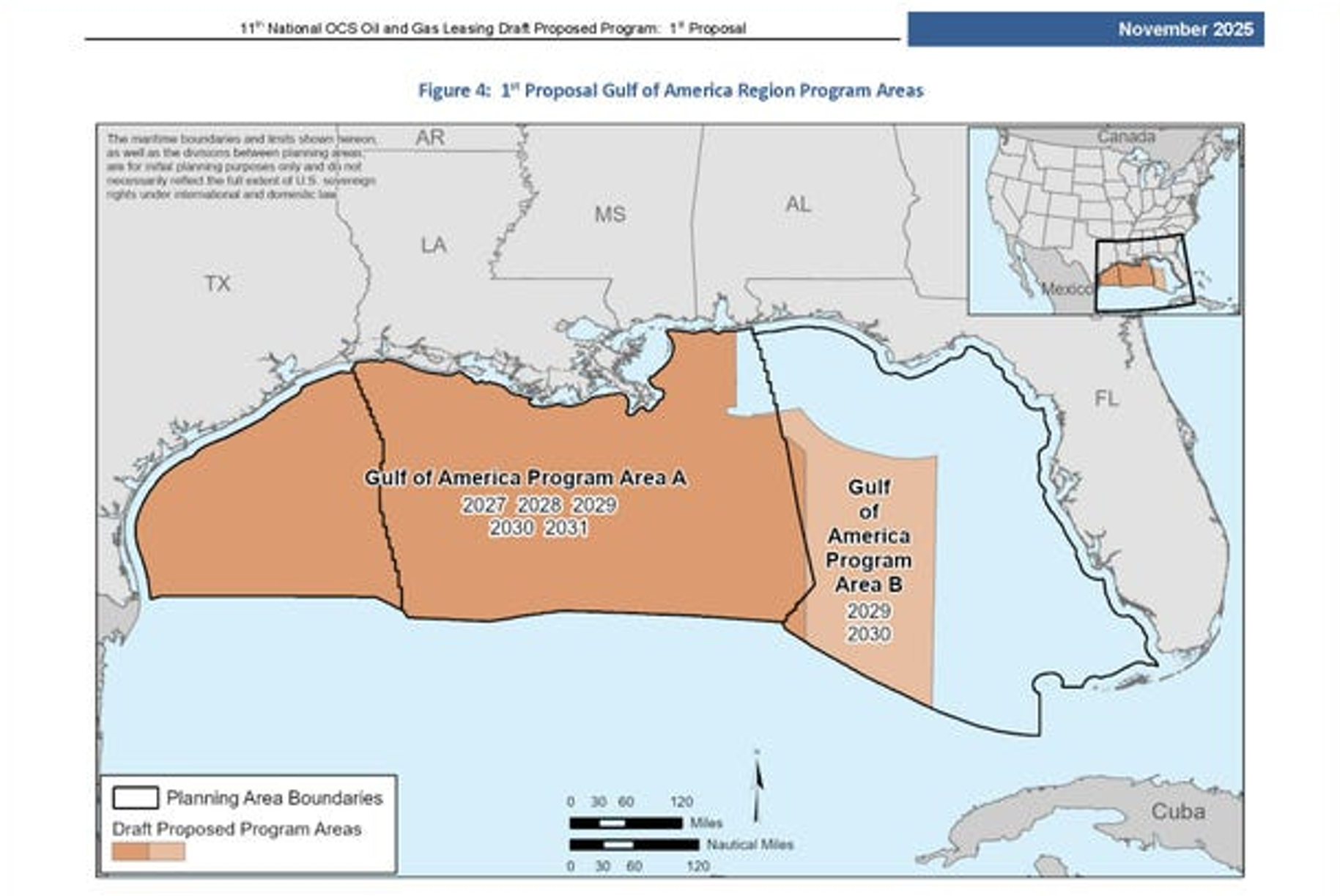
A map released by the Department of Interior showing proposed oil drilling expansion in the Gulf of America
DeSantis Dissents on Drilling: The Bureau of Ocean Energy Management recently unveiled plans to extend oil drilling into federal waters off Florida for the first time in decades, much to the chagrin of Sunshine State residents and representatives. The potential development has caused quite a bit of pushback on both sides of the aisle, who worry that drilling a mere 100 miles off the Florida coastline could cause irreparable damage to ecosystems and tourism – the lifeblood of the state. Many were quick to point to a 2020 presidential memorandum that President Trump signed in his first term to withdraw new oil and gas leasing off the coasts of Florida, Georgia, and South Carolina until 2032. DeSantis also points to an amendment to Florida’s Constitution (Article II. Section 7) which prohibits offshore oil and gas drilling in state waters, approved by 69% of Florida voters back in 2018. A 60-day public comment period is now open through Jan. 24, 2026. Jimmy Patronis and seven other Florida members of Congress stand opposed, along with former Governor and Florida Senator Rick Scott. Florida Democratic Party chair Nikki Fried, called the drilling a “nonstarter.” For many, memories of the oil and tar balls on Florida beaches from the 2010 Deepwater Horizon oil spill 130 miles off the Florida coast are fueling a very effective case for keeping the drills from Florida’s Gulf Coast.
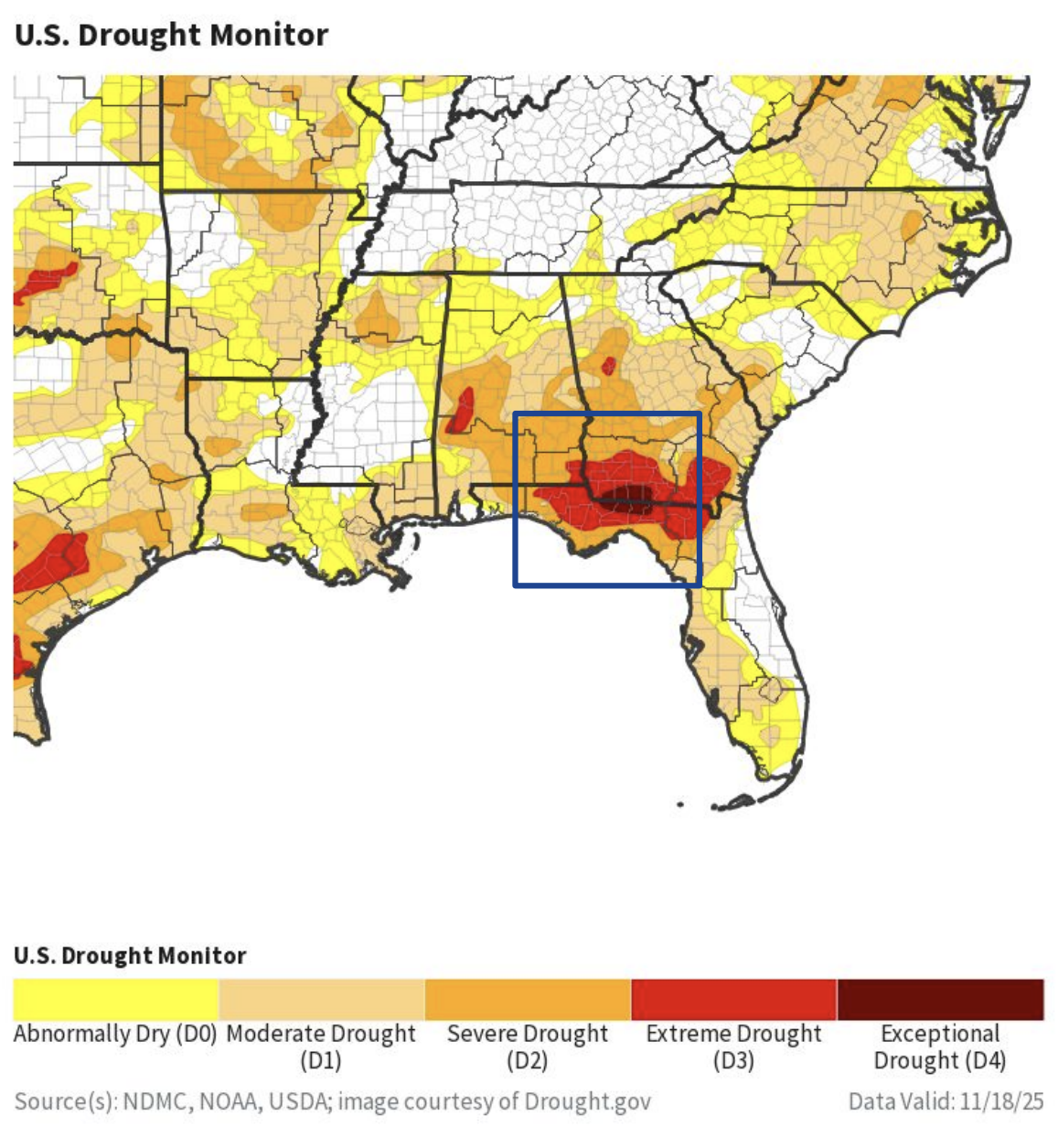
Source: National Weather Service
Drought Capital: Tallahassee, and portions of Southern Georgia are now locked in an “exceptional drought” according to National Weather Service forecasters, who say swaths of Gadsden, Leon, Jefferson, and Madison counties are the only areas in the nation with conditions on this scale. This is the first time since 2011, a whopping 14 years, that the region has reached such a designation. The city went through most of September and October without any rain, and with warm weather drying up the existing water, residents should be on high alert for fire hazards. Burn bans have gone into effect in the above counties, with experts advising residents to remove any excess brush or pine needles on or around their property, and take extra precautions with fire pits and deep friers. Farmers, agriculturalists, and hobby growers are all encouraged to get extra water to their plants to counteract this dry spell, that can’t end soon enough, even with this past weekend’s showers.
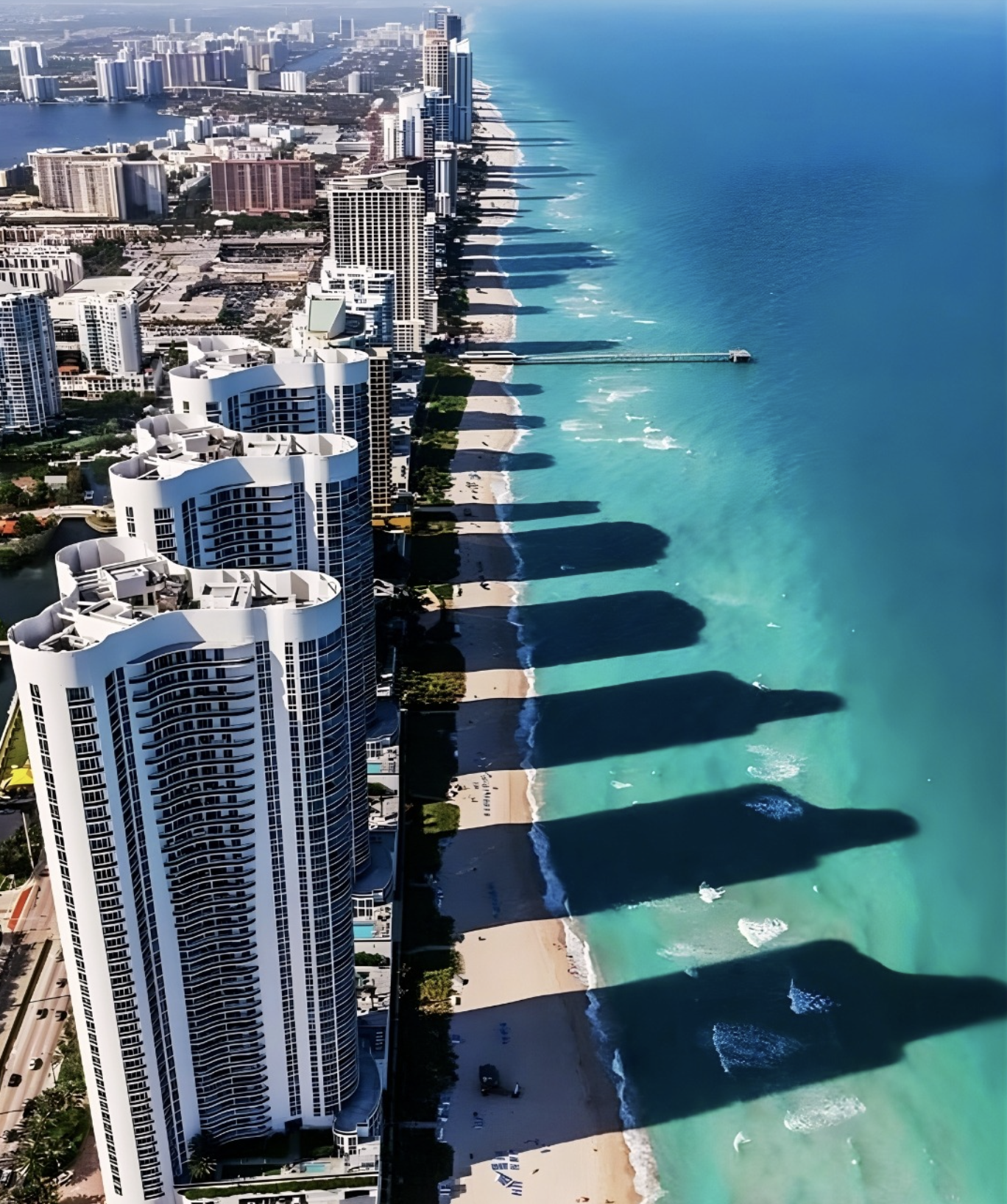
High-rise condominium buildings in Sunny Isles Beach, Florida. Courtesy: Fiery Trippers
Florida’s Sinking Skyscrapers: Florida has a sinking problem, as exposed by two fascinating articles from the Miami Herald. It reports that decades ago, when high-rise condominiums and hotels started sprouting up and down barrier islands like Sunny Isles Beach, engineers assured that the sandy strata was accounted for in construction. Now things are starting to shift. Geotechnical engineering firms themselves are acknowledging the miscalculations and noting that “Sunny Isles has had several tower structures settle significantly more than predicted,” up to two- or three-times initial calculations. A University of Miami study from earlier this year echoed the same sentiment – finding 25 buildings from Miami Beach to Sunny Isles sank up to 3.1 Inches between 2016 and 2023. The unexpected settling can lead to some alarming structural issues: cracked pipes and facades, warped floors, and doors and windows popping out of frame, many of which call to mind the reports from the Champlain Towers South condo building in Surfside in the months leading up to its June 2021 collapse that killed 98 residents. The research done in the wake of the tragedy should lead geotechnical engineers toward better understanding the Florida substrate when the final report is released this Spring 2026. The Herald’s second article explores the unseen forces – from higher tides, dissolving limestone, and even vibrations from nearby construction – that are believed to be contributing to the settling. Experts say that the settling can be remedied and shouldn’t cause any immediate damage. In the meantime, the Herald reports that the under-construction Bentley Residences, which will be among the tallest towers in Sunny Isles Beach, have pilings drilled deeper – 200 feet – to prevent any settling.
 LMA Newsletter of 12-8-25