

By Matthew Lavisky, Esq.
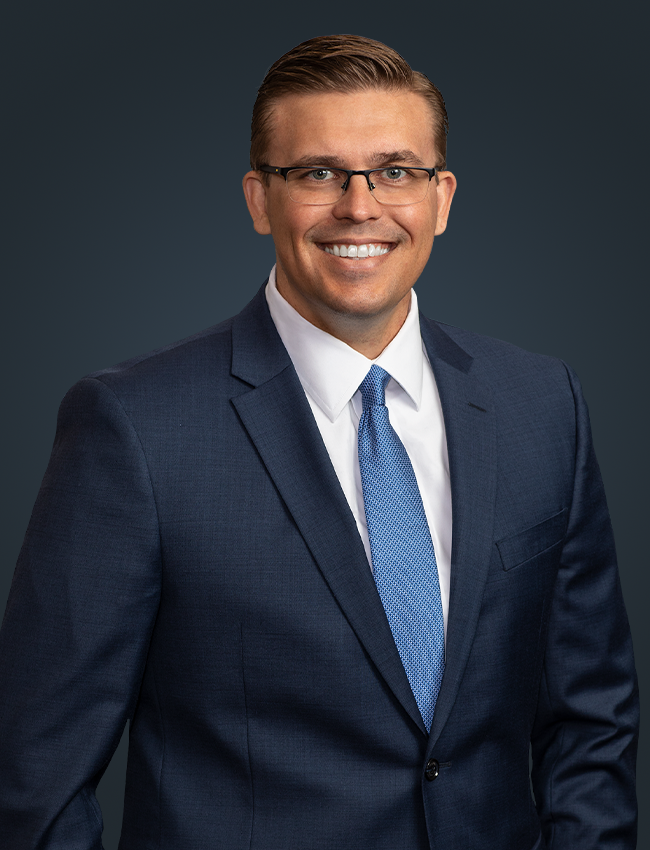
Matthew Lavisky, Esq. Courtesy, Butler Weihmuller Katz Craig LLP
Sometimes, a bill comes clad in sheep’s clothing. But to borrow words from Justice Scalia, “this wolf comes as a wolf.”[1]
For decades, Florida was in an insurance crisis. I read the Internet commentary discussing theories of the cause. Regardless of one’s view of the cause, nobody can argue that generous attorney’s fee awards lowered insurance premiums. Florida Insurance Commissioner Michael Yaworsky made that point at a recent hearing. He was clear that, whether the recent reports about profits to Managing General Agents (MGAs) were accurate or not, the proximate cause of the insurance crisis was abusive litigation. And, he said, the Legislature could address any concerns about MGAs without undoing the prior reforms.
The Legislature passed Senate Bill 2A effective December 16, 2022. Barely two years later, HB 1551 seeks to undo this historic reform. It is bad for Florida.
Senate Bill 2A
Senate Bill 2A eliminated attorney’s fees in property insurance litigation. This was a necessary reform.
Section 627.428, Florida Statutes (the old fee-shifting statute) was in application far removed from what its plain text should have meant. The statute said:
upon the rendition of a judgment or decree by any of the courts of this state against an insurer and in favor of any named or omnibus insured or the named beneficiary under a policy or contract executed by the insurer, the trial court or, in the event of an appeal in which the insured or beneficiary prevails, the appellate court shall adjudge or decree against the insurer and in favor of the insured or beneficiary a reasonable sum as fees or compensation for the insured’s or beneficiary’s attorney prosecuting the suit in which the recovery is had.
The statute provided that attorney’s fees would be awarded only upon “rendition of a judgment or a decree” and the attorney’s fees had to be “reasonable.” That seemed, on its face, innocuous enough. But three legal principles divorced this statute from its plain text. These cases show the dangers inherent when a Legislature passes vague statutes and leaves it to the courts to give them meaning.
First, although the statute itself applied only when there was a judgment, Florida courts engrafted onto the statute a “functional equivalent of a confession of judgment” doctrine. Under this doctrine, there no longer needed to be a judgment or a decree. Instead, in certain circumstances, if an insurer settled a claim after a lawsuit was filed “the payment of the claim [wa]s, indeed, the functional equivalent of a confession of judgment or a verdict in favor of the insured.” Wollard v. Lloyd’s & Companies of Lloyd’s, 439 So. 2d 217, 218 (Fla. 1983). So now attorney’s fees could be awarded not for “judgments” but post-suit payments.
Second, the law generally holds that one cannot recover as reasonable attorney’s fees more than they owe their lawyer. So one may think the statute means that if an insured files suit against their insurer and recovers $100,000, the attorney could recover from the insurer the 40% contingency, or $40,000. However, the Florida Supreme Court found in Kaufman v. MacDonald, 557 So. 2d 572 (Fla. 1990) that an insured could contract with their attorney to pay the attorney whatever a court considered reasonable. By doing so, the attorney could recover more than the insured ever would have had to pay the attorney.
Third, the statute said the attorney’s fees had to be “reasonable.” Florida courts adopted a lodestar approach to determine reasonableness. Under that approach, a court determines the “reasonable hourly rate” of an attorney, and multiplies it by the number of hours the attorney reasonably expended, and awards that amount. Florida Patient’s Comp. Fund v. Rowe, 472 So. 2d 1145, 1150 (Fla. 1985).
There are several problems with that approach. Most attorneys can tell you with certainty their reasonable hourly rate because it is the amount that a paying client agrees to pay the attorney in a competitive legal market in an arms-length transaction. But the “reasonable” hourly rate under the lodestar approach is purely theoretical because no one agreed to pay that amount. It is whatever amount a judge considers reasonable. And how does a judge determine that amount? By asking other lawyers who serve as “experts” on how much lawyers should make. So a lawyer hires another lawyer (the expert), to testify to a third lawyer (the judge) what the reasonable rate is for her or his services. It should shock few that this system of lawyers determining the value of the services of lawyers led to hugely excessive “reasonable” rates for run-of-the-mill litigation. One court described it this way:
The use of lawyers as expert witnesses to justify the fees sought as reasonable seems to have lead only to more exaggeration and invention. Perhaps it is quixotic to expect the lawyer witnesses who actually testify at fee hearings to do anything but justify the fee claimed, for if they do not they simply would not be called to testify. Opposing expert witnesses may not be much of a reliable check on the claimant’s lawyers, because lawyers in general profit from the patina of authority given to one’s own fees by a court award of a similar one. Hence, the obsession to justify hours and rates now seems to riddle the fee process with an air of mendacity.
This obsession with hours and rates has apparently caused judges and lawyers to lose sight of a truth they formerly accepted almost universally: viz., that there is an economic relationship to almost every legal service in the marketplace. The value of any professional service is almost always a function of its relationship to something else—i.e., some property or other right. In this case, for example, no business could long expect to spend $60,000 to collect $100 accounts. Trial judges and lawyers used to accept a priori the idea that, no matter how much time was spent or how good the advocate, the fair price of some legal victories simply could not exceed—or, conversely, should not be less than—some relevant sum not determined alone by hours or rates. Since Rowe, that all seems lamentably forgotten.
Ziontz v. Ocean Trail Unit Owners Ass’n, Inc., 663 So. 2d 1334, 1335–36 (Fla. 4th DCA 1993). So, for example, if an attorney charged their client $200,000 to recover $30,000 for a roof, they’d probably face a lawsuit or bar complaint for charging excessive fees. But, as the statute was interpreted, “reasonable” took on a meaning divorced from ordinary understanding. Attorneys could recover multiple times more than their clients. Cases became about the lawyers, not the insureds.
The result was predictable. Lawyers representing insureds over-litigated cases, fought everything, put every case into suit, and put as many lawyers on a file as possible. There was no check on this by the client because the client was never faced with paying the tab. Courts awarded hundreds of thousands of dollars in attorney’s fees to litigate relatively small disputes. The “reasonable hourly rate” awarded was usually multiple times that of the lawyer who defended the case (sometimes around $700/hour and, as seen in the Bumgarner case below, up to $1,000/hour). To boot, a cottage industry developed of lawyers who testified about the amount that should be awarded to other lawyers. As an example, in one case, a lawyer made $21,000 to testify to a court about how much the court should award another lawyer. Bumgarner v. Sec. First Ins. Co., 2023 WL 7458609 (Fla. 20th J. Cir. Ct. October 12, 2023). Let that sink in. Lawyers are being paid from Florida’s homeowner’s premiums an amount that a teacher or firefighter might make in six months just to testify about how much another lawyer should be awarded. And the lawyers actually litigating the cases often were awarded what hard-working Floridians make in a decade to litigate a single case about whether a roof was damaged by wind or was just old and worn out. As seen in the Bumgarner case, the hourly rates can approach what a teacher, firefighter, or police officer might make in a week.
This money comes from somewhere: Florida’s homeowners. It was unsustainable for lawyers to collect hundreds of thousands of dollars in fees litigating cases where the insurer charged a premium of $5,000. From this, we got our crisis.
Senate Bill 2A went a long way toward fixing it. Despite inflation and multiple named storms, Florida saw stabilization in its rates and insurance market.[2] And the reforms have barely taken effect. That is because lawyers argue, and courts generally accept, that the repeal of the attorney’s fee-shifting statute only applies to policies issued after its effective date. As such, Hurricane Ian claims still are under the old law. So the lawsuits over Hurricane Ian still carry with them the attorney’s fee-shifting statute. Florida has not yet had time to experience the full effect of the reforms, but there already are very real improvements to the insurance market.
House Bill 1551
House Bill 1551 pretends to be different from the old law, but it is not. House Bill 1551 purports to adopt a prevailing party standard. Generally, “the ‘prevailing party’ for purposes of entitlement to attorney’s fees is ‘the party prevailing on the significant issues in the litigation.’” Isola Bella Homeowners Ass’n, Inc. v. Clement, 328 So. 3d 1132, 1134 (Fla. 4th DCA 2021). But House Bill 1551 specifies that the insured is the prevailing party if he or she obtains a judgment higher than the insurer’s settlement offer. So, for example, if an insured demands $500,000, the insurer offers $100,000, and the insured recovers $101,000, the insured is the “prevailing party” under the statute, despite losing the lawsuit by recovering a fraction of the amount demanded and in dispute.
This is precisely how it was under the old law, just with a different language. In Danis Indus. Corp. v. Ground Improvement Techniques, Inc., 645 So. 2d 420, 421 (Fla. 1994), the Florida Supreme Court held that the prevailing insured was “one who has obtained a judgment greater than any offer of settlement previously tendered by the insurer.” There is no difference between the law under Danis and House Bill 1551.
House Bill 1551 also purports to be a two-way attorney’s fee-shifting statute. But House Bill 1551 seemingly removes an insurer’s use of Proposals for Settlement under section 768.79, Florida Statutes, which already allowed an insurer to recover attorney’s fees in certain circumstances. So, House Bill 1551 just replaced Proposals for Settlement with a different mechanism.
House Bill 1551 brings back the old law with all of its consequences. There is no meaningful distinction between it and the laws that led to the insurance crisis.
There was another very real harm caused by the old law, and, thus, would be caused by House Bill 1551. House Bill 1551 only allows fees when there is a judgment. And under the Kaufman case, attorneys were able to recover more than their client would have had to pay them by saying the client agreed to pay the amount awarded by the court. But what happens when an insurer offers an amount to satisfy the insured and pay the percentage of the recovery that would be taken by the lawyer, but not enough to satisfy the lawyer for what they perceive to be the value of their work on the case? Under their contract, it seems the lawyer is entitled to only the percentage and should advise the client to accept the settlement offer that is satisfactory to their client. But that is not the way it has played out. The lawyer’s interest in continuing litigation to realize his or her fee even when doing so does not benefit the insured any more than the settlement offer created a very real conflict. And some lawyers resolved this conflict in favor of their financial interest. Florida Bar v. Strems, 357 So. 3d 77, 90 (Fla. 2022); The Florida Bar v. Patrick, 67 So. 3d 1009, 1013 (Fla. 2011). These cases are not outliers. There are pending lawsuits against other lawyers. And any defense lawyer will confirm that it is not uncommon to be told after a settlement is reached on a global basis that the lawyer’s cut is more than the client’s. The lure of a court-awarded attorney’s fee under the old law (and House Bill 1551) often incentivized the lawyer to put their own interest ahead of their client’s and prolong litigation.
Finally, “[a]ll of the models of settlement imply that parties divide between them the gains from avoiding litigation.” Frank H. Easterbrook, Discovery As Abuse, 69 B.U.L. Rev. 635, 636 (1989). If the cost of being “wrong” about whether a $30,000 roof is damaged by wind or not is hundreds of thousands of dollars in attorney’s fees, the likelihood that invalid claims will be settled increases. This means that Floridians are paying for the normal upkeep of their neighbors’ homes through increased premiums because the attorney’s fee-shifting statute puts enormous pressure on insurers to settle even dubious claims.
CONCLUSION
There are already sufficient safeguards if an insurer does not pay valid claims. The insured can sue for bad faith under section 624.155, Florida Statutes and recover attorney’s fees. There is regulatory oversight by the Office of Insurance Regulation. And insureds can recover attorney’s fees using Proposals for Settlement.
House Bill 1551 undoes all of the prior reforms. It is a windfall for plaintiffs’ lawyers. The bill is good for lawyers but bad for Florida.
[1] Morrison v. Olson, 487 U.S. 654, 699 (1988) (Scalia, J. dissenting)
[2] https://www.flgov.com/eog/news/press/2025/governor-ron-desantis-announces-rate-reductions-miami-dade-county-auto-insurance.
Matthew J. Lavisky is a Partner in the Tampa office of Butler Weihmuller Katz Craig LLP. He previously served as President of the Florida Defense Lawyers Association and currently serves on the Board of Directors of DRI.
 LMA Newsletter of 3-24-25