

While Florida’s overall infrastructure earns a “C”
 A Clearwater high-rise condominium is evacuated for feared structural issues, Florida gets its infrastructure report card, and researchers discover seaweed masses heading to Florida beaches that could dwarf the mess of 2022. It’s all in this week’s Environmental and Engineering Digest.
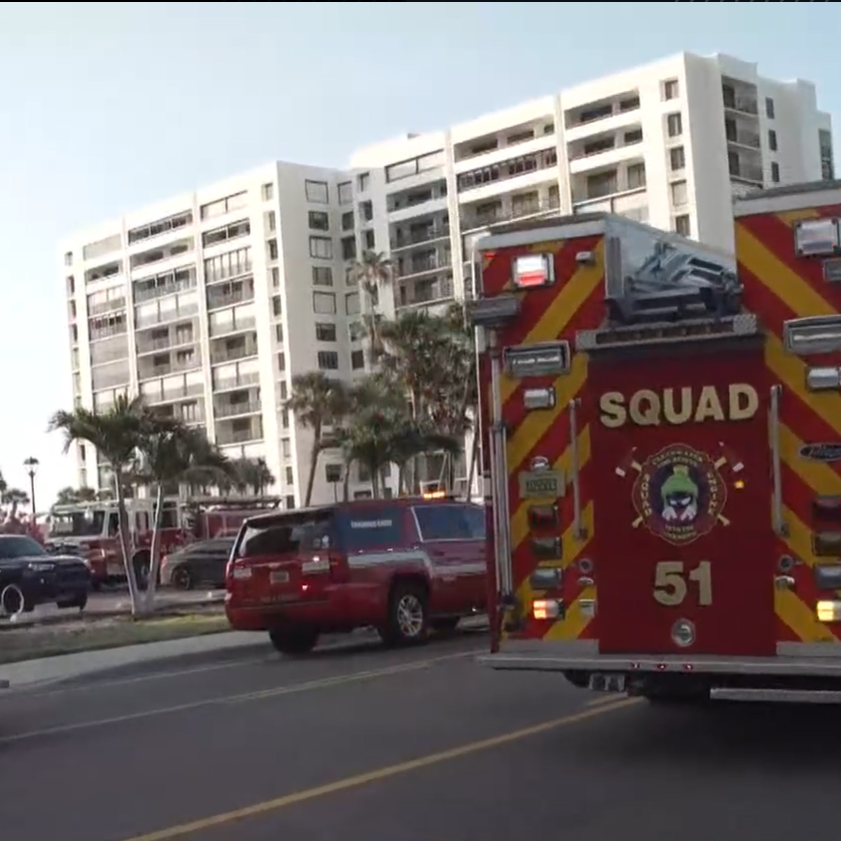
Responders rush to the South Beach Condo III on Cedar Key Beach in Clearwater, FL, May 7, 2025. Courtesy, WFTS-TV
Sand Key Condo Evacuation: Residents of a Sand Key condominium tower in Clearwater were allowed back into their building last week, nearly a week after a mandatory evacuation because of “potential structural issues” found by engineers in the underneath parking garage. The 12-story “South Beach Condo III,” finished back in the 1970s, had its required 30-year checkup last September in compliance with the 2022 state laws and was found to be in good condition. However, on May 7, workers doing concrete slab repairs in the garage discovered a huge crack “a couple of feet wide” and voids in a support column. Emergency repair work was initiated and the 60 residents were quickly evacuated. The Tampa Bay Times reported that while the condo did conduct a milestone inspection, the association still had not submitted their inspection report by the December 31 deadline, according to city records. “Reports indicated that the lower level parking garage was flooded in Hurricane Milton in October, potentially causing the slab and support structures to deteriorate,” according to the Insurance Journal. The entire situation is eerily reminiscent of the 2021 Surfside Condo Collapse that killed 98 people, where preliminary investigations have suggested that failed support columns caused the building to go down. Resulting condo legislation in 2023 required the milestone inspections and reserve funds to pay for necessary repairs. This spring, the legislature relaxed some of those requirements in HB 913 that awaits the governor’s signature. (Read Could Florida Condos Be Less Than Fully Insured? in this newsletter.)
Traffic along I-4 today leaving the Tampa area, October 2024
Florida’s Report Card: The American Society of Civil Engineers (ASCE) has published its 2025 state infrastructure report card, and the Sunshine State pulled a “C” average across most fields for its 2021 report. While this isn’t yet a glowing review, Florida has implemented some of the most resilient state infrastructure and kept afloat through several major storms, causing several grades to rise from the previous report card. In Florida’s better grades were Bridges (B), Ports (B), and Solid Waste (B+), and on the lower end were Coastal Areas (C-), Dams (D-), Levees (D+), and Schools (D+). Generally, these scores boil down to the age of the infrastructure, with Florida’s dams reaching an average age of 50 years, levees at 58 years, and schools at 31 years. ASCE has said that while Florida’s average is still a C, the grades are overall higher than the national average, and much of the progress stems from storm preparedness and state departments like transportation and environmental protection “pushing smart investment solutions in roadways and stormwater systems.” You can read the full report card here.
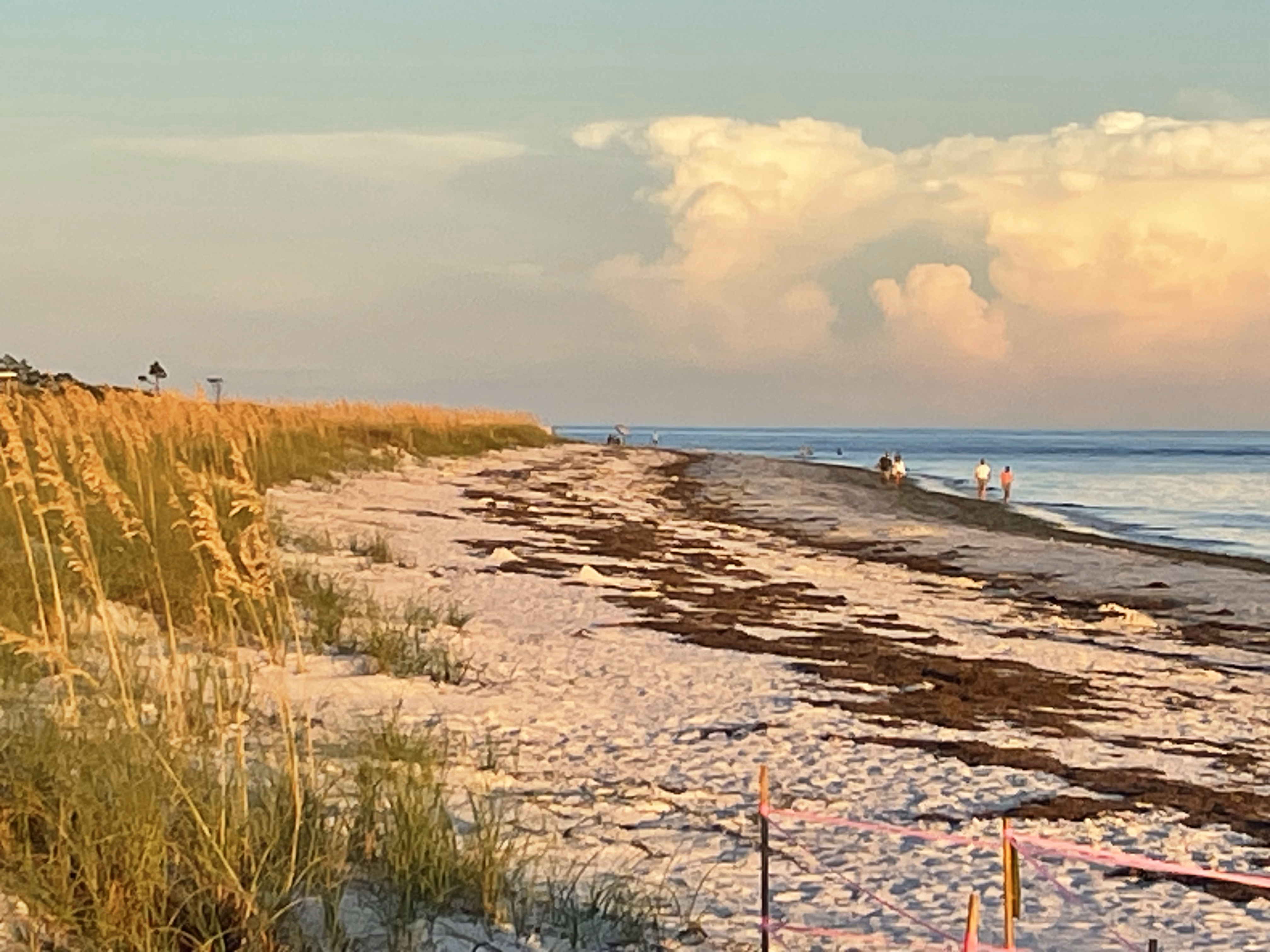
Seaweed on the beach in Alligator Point, FL, September 1, 2024
Seaweed Swells: Florida is no stranger to seaweed, masses of which are smelly messes for tourists and millions of dollars of spending for cities to clean up each year. However, scientists at the University of South Florida Optical Oceanography Lab are predicting this summer could be the worst seaweed season yet – with over 40% more sargassum than the record-breaking 2022 season. The lab reports that this particular bloom started back in March and was at record-breaking mass by the end of April. Now we wait for it to wash ashore. Overall, 30 million metric tons of seaweed have been measured using satellite imagery, however scientists aren’t exactly sure where the seaweed will wash up or even how much will make its way to Florida. They’re working to develop better wind-wave-storm simulators and mathematical models to predict these trends. One thing is for certain say scientists: as the water warms up it creates the perfect environment for aquatic plants.
 LMA Newsletter of 5-19-25