

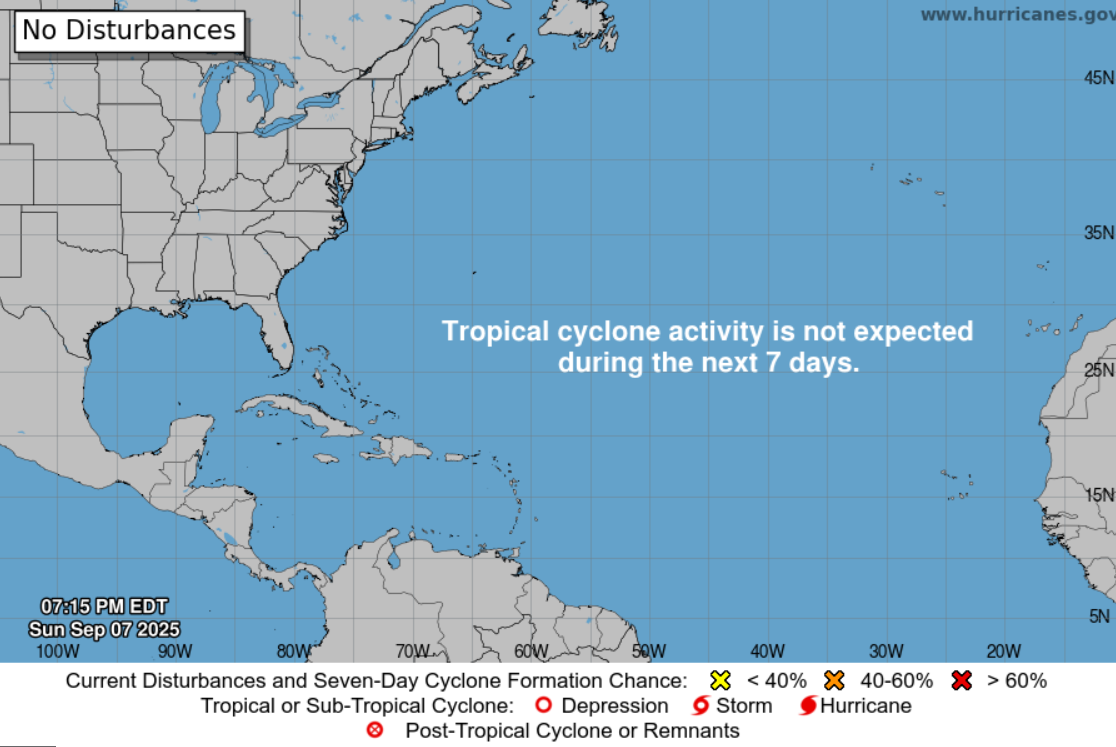
The NOAA 7-day Tropical Weather Outlook as of Sunday evening, September 7, 2025
Welcome to the heart of the Atlantic Hurricane Season (and our first scare), where from early September through mid-October, the greatest number of hurricanes usually develop – with the greatest number of landfalls, too. This past Friday morning, the National Hurricane Center had given a tropical disturbance halfway across the Atlantic and heading our way a 90% chance of developing into a cyclone. By Saturday afternoon that had shrunk to a 20% chance and then yesterday (Sunday) morning, a 0% chance.
Good news for sure, but tempered by AccuWeather’s latest warning to expect anything that turns into a cyclone to then turn into a hurricane – fast – especially in the western Caribbean and Gulf of America. “If anything goes in there, it almost certainly will become a major hurricane, said Alex DaSilva, AccuWeather’s lead hurricane expert. “The ocean heat content, or the depth of warm ocean water in the Gulf and western Caribbean, is near record high levels. This is extremely concerning.” AccuWeather is still forecasting 13 to 18 named storms, including seven to 10 hurricanes and three to five major hurricanes that reach Category 3 strength or higher.
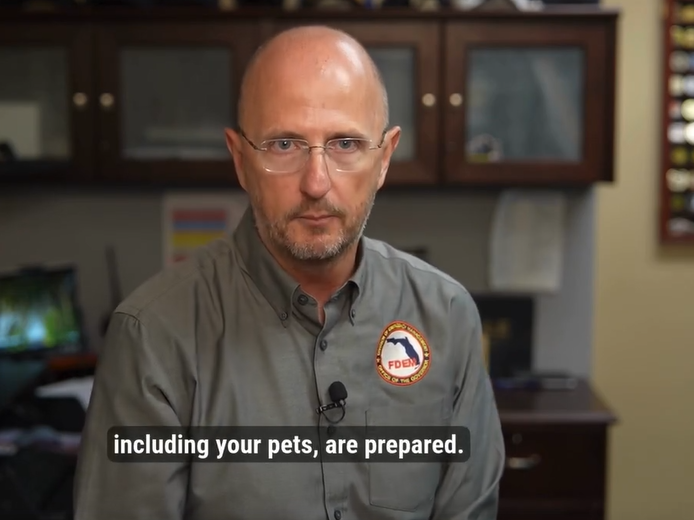
Florida Emergency Management Director Kevin Guthrie
As we like to say, “Forewarned is forearmed” and “Information is power.” September is National Preparedness Month and FEMA has issued a short and simple guide that is part of its year-round Ready Campaign. September is also Florida Preparedness month. State Emergency Management Director Kevin Guthrie is sharing quick video tips each day, “30 Ways in 30 Days,” to remind Floridians as we enter peak hurricane season that preparedness can be easy! Be sure to also visit FloridaDisaster.org’s Plan & Prepare webpage. As Kevin Guthrie has said, “Preparedness today means resilience tomorrow.”
Courtesy, Verisk
Another warning: if/when we get hurricanes, they won’t likely be smaller in cost. Verisk’s newest report, Modeling Insured Catastrophe Losses: A Global Perspective for 2025 predicts a “new reality” from unprecedented natural cat losses. Verisk says we should expect future global losses to exceed $152 billion annually, up from the $132 billion per year average loss over the past five years. “This year’s modeled losses reflect a fundamental shift in the risk landscape. Frequency perils are driving sustained, high-impact losses across geographies, and insurers must evolve their strategies to meet this challenge head-on,” said Verisk Extreme Event Solutions President Rob Newbold. “Natural catastrophe losses are no longer statistical anomalies — they are the new normal.”
A reminder that you can easily share this or any other story with your friends & colleagues by clicking the red SHARE THIS button below or Share this entire newsletter edition.
Up next, the early success by artificial intelligence in forecasting hurricane paths, another decrease in workers’ comp insurance rates, evolving Florida insurance regulations, the latest on FEMA reforms, plus a look at the now publicly-available condominium blacklist!
 LMA Newsletter of 9-8-25