

How past reforms are easing reinsurance burdens
 Former Florida Insurance Commissioner Kevin McCarty weighs-in directly on the MGA controversy, what the recent legislative reforms to Florida’s property insurance market have done for needed reinsurance availability, plus a new study shows rising customer dissatisfaction with homeowners insurance claims. It’s all in this week’s Property Insurance News.
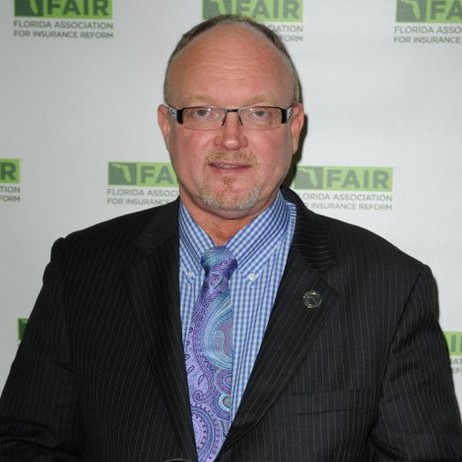
Former Florida Insurance Commissioner Kevin McCarty. Courtesy, FAIR
McCarty Speaks: Longtime former Commissioner McCarty is urging the Florida Legislature not to rush to judgement following the misleading Tampa Bay Times story suggesting property insurance companies were shifting billions of dollars to Managing General Agents (MGAs) and affiliates, while suffering big hurricane losses from 2017-2019. The story was based on a summary of a draft consultant’s report done for the Florida Office of Insurance Regulation (OIR) three years ago.
“If the report is asserting that compensation was excessive, I think you would have to have demonstrated how you came to that conclusion, because it doesn’t in the report,” McCarty told the Insurance Journal’s William Rabb in a long-form interview that is loaded with great insight. “Plus, it shows the amount of money that went to the MGAs but it neglected to mention that 15% goes to commissions and 10% goes to policy assurance.” McCarty said “there’s a legitimate role for an MGA, subject to oversight,” noting, per the OIR report, that some MGAs waived their fees and returned up to $951 million back to insurance companies from 2017-2019.
He also made the same point I have been making to reporters, most recently in an interview with WFSU-FM, part of National Public Radio for Florida. The report talks about $14 billion going to affiliates and investors. And to that, I say this: We have about 8 million homeowners insurance policies in our state and only about 40 to 50 companies write those policies. If that kind of outflow of dollars, billions of dollars, as all the headlines have said, is true, then why don’t we have hundreds of companies in this marketplace, which we don’t?
McCarty also warns the Legislature not to undo “one of the most consequential legislative reforms in 30 years,” by repealing some of the 2022 & 2023 reforms that eliminated one-way attorney fees for plaintiff lawyers. “The worst thing you could do now is overreact and upset the fragile balance of investments in Florida. That’s the real fear,” he said.

© Can Stock Photo / radiantskies
Reinsurance Impacts: Further proof that the legal reforms from the 2022-2023 legislative session are working to stabilize the market and lower rates? This article in Reinsurance News, Florida attractive, as it trades above overall cat bond market spread: Tenax Capital, in which Tenax portfolio manager Toby Pughe is quoted. “In our view, Florida remains attractive from both a pricing perspective and due to its continuously improving legal environment. While last year we preferred to stay on the sidelines − waiting for a test of the new regulatory framework and to ride out the anticipated active hurricane season − we now consider Florida wind an attractive risk to add to the portfolio…it’s undeniable that the wind is currently in the carriers’ sails,” Pughe said.
Longtime Reinsurance News editor Steve Evans acknowledges the impact excessive litigation and fraud has played in the Florida market. He recently noted that “litigation and fraudulent claims have been something quite unique to behold in the Sunshine State.” Evans lauded last year’s funding of OIR to contract with reinsurance industry experts to evaluate the impact of reinsurance cycles on property insurance rates.

Customer Dissatisfaction: The latest J.D. Power study reports that a combination of factors, including extreme weather events, premium increases, and longer repair times have taken a toll on homeowners satisfaction with their insurance claims experience. “Customers are, in essence, paying higher prices for slower service,” said Mark Garrett, Director of Insurance Intelligence at J.D. Power. “The average claimant does not receive final payment on a claim until 44 days after the first notice of loss, and unless insurers are communicating frequently and clearly along the way, customer satisfaction suffers.” You can read more in Reinsurance News.
 LMA Newsletter of 3-31-25