

Plus new money for algae blooms
 New oil & gas drilling rules for Florida are being considered in the legislature, Governor DeSantis announces $389 million to improve Florida’s water supply and prevent algae blooms, and a government report shows growing saltwater intrusion in South Florida aquifers. It’s all in this week’s Environmental and Engineering Digest.
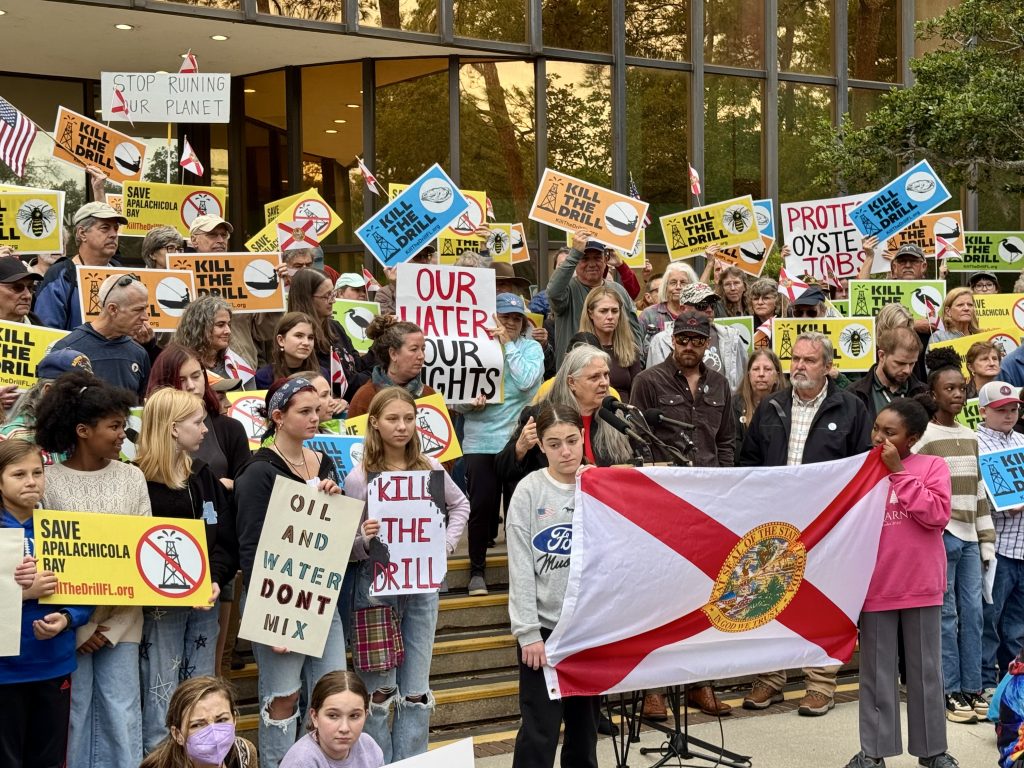
Protestors rally in front of the Florida Department of Environmental Protection to fight oil drilling on December 9, 2024. Courtesy, Apalachicola Riverkeeper
To Drill or Not to Drill: Last year, the Florida Department of Environmental Protection (DEP) announced permits for exploratory oil and gas drilling in a nature preserve in Calhoun County, in the Panhandle. The Florida Legislature has responded this session with bills to “kill the drill”, prohibiting both oil and gas drilling along the Apalachicola River. The bills cleared both their first House and Senate committees last week. The proposals differ in their approach, with the House proposal by Rep. Jason Shoaf (R-Port St. Joe) and Rep. Allison Tant (D-Tallahassee) barring the DEP from issuing drilling permits 10 miles along a 50 mile stretch of the Apalachicola, and the Senate’s version simply specifying the factors for DEP consideration when evaluating an application. As of now, companies do not have a permit to actually begin extraction drilling, and if this legislation passes, it would essentially set new standards for state approval of oil and gas drilling projects.
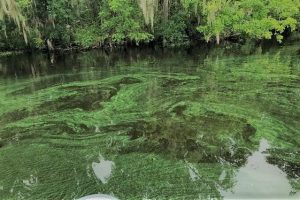
Blue-green algae in the Indian River Lagoon. Courtesy, Central Florida Kayaking
The Future of Florida’s Water: Governor DeSantis unveiled $389 million in state grants early last week to make a further commitment to Florida’s water supply, doubling down on “being good stewards of our natural resources.” The projects focus mostly on lowering nitrogen and phosphorus content in state coastal waters to abate potential algae blooms, including the Indian River Lagoon, Caloosahatchee River, and Biscayne Bay. Also on the list are new water reclamation facilities, Septic-to-Sewer systems, and general upgrades around the Sunshine State. “These are going to make a big difference,” said DeSantis, appearing in Palm Bay. He and other advocates say the investment is well worth the cost, as Florida’s waterways are a cornerstone of the economy. The Florida Department of Environmental Protection, which will administer the grants, is very focused on improving the health of seagrasses, as the base of the aquatic food web has fallen on hard times, not fully recovered from severe blooms that hit the Indian River Lagoon way back in 2011. While resource managers say it could take another 5 years and 20 years to fully save the ecosystem, funding like this is certainly a step in the right direction.
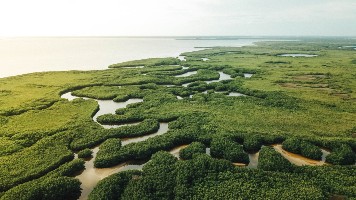
Mangroves in the Florida Everglades serves as a recharge area for underground aquifers. Courtesy, SFWMD
Saltwater Intrusions Down South: The South Florida Water Management District (SFWMD) has released an alarming report, showing that saltwater has pushed even further inland into South Florida’s freshwater aquifers, threatening the drinking water supply of over 4 million residents. In a process known as saltwater intrusion, seawater contaminates freshwater supplies by seeping further inland underground due to pump overextraction and rising sea-levels. The intrusion was tracked across Broward, Palm Beach, Martin, and St. Lucie counties. Recent data shows chloride levels in aquifers rose from 250 mg in the late 1990s to up to 600 mg in 2024, a heavy indication of intrusion and the dangers that come alongside it. It can cause irreparable damage to water pumps and bring potential risk to human health and the environment, including hypertension, kidney failure, and exacerbate water scarcity in already struggling areas. Hallandale Beach, Hollywood, and Davie – all in Broward County – show some of the largest changes.
Since 2009, SFWMD has been monitoring underground saltwater, using its dynamic mapping program to delineate where the salty and freshwater meet. They use this information to champion potential solutions to the intrusions, trying to minimize their damage to humans, infrastructure, and the environment – namely reducing wellfield pumpage to allow natural water recharge through processes such as rain. Their research and reports have and will continue to be useful in forming resiliency plans, helping Florida be better equipped for issues like saltwater intrusion moving forward. .
 LMA Newsletter of 3-31-25