

Plus, how AI is changing storm forecasting
 The FEMA Review Council releases some recommendations on how to change FEMA, a Congressional committee approves its own FEMA fix, artificial intelligence had the best initial forecast in last month’s hurricane, and Florida has a new Chief Resilience Officer. It’s all in this week’s Disaster Management Digest.
 FEMA Review Council: The FEMA Review Council held a recent Subcommittee on Response & Recovery Assessment meeting, bringing together emergency managers from across the Northeast and national partners to offer actionable steps in FEMA reforms. They echoed the sentiments of the Review Council at large: communities need faster relief, less paperwork, and streamlined processes in disaster recovery. While other ideas percolate around the Council, the ideas of a universal application process and access to upfront funding seem to have stuck, as they were adopted quickly and championed by many FEMA Review Councilmembers at its late August meeting. With the National Flood Insurance Program due to expire on September 30th barring Congress’ reauthorization, and FEMA’s broader fate hanging in the balance, the future of disaster assistance is hazy. In an effort to reduce reliance on federal government funding after floods, some members of the council have begun to warm up to the idea of parametric insurance coverage for local and state governments, wherein a policy pays a predetermined sum when a loss event reaches a ‘trigger point.’ The council’s final report is due to the President this fall.
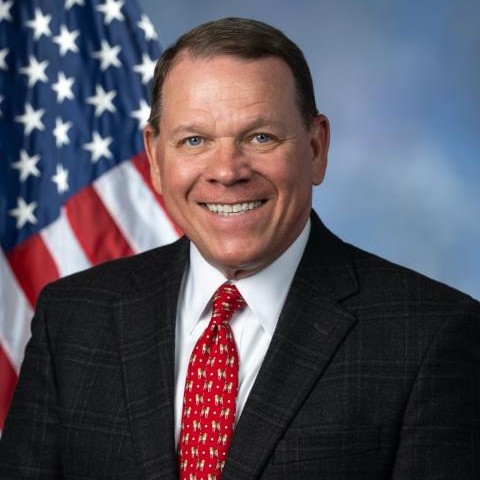
Rep. Sam Graves (R-MO), Chairman of the U.S. House Transportation & Infrastructure Committee
FEMA Meets FEMA Act: The U.S. House Transportation & Infrastructure Committee recently met for a markup of The Fixing Emergency Management for Americans (FEMA) Act of 2025, making amendments to the potentially game-changing legislation we reported on last month. The bill then passed in a 57-3 vote. Key provisions include restoring FEMA to a cabinet-level agency out from under the DHS, streamlining public assistance through faster grants, and a universal application for disaster aid. The text also encourages mitigation and resilient building, and rewarding local preparedness – which protects the taxpayer in the long run. “The FEMA Act is designed to address one simple fact that we all recognize, especially Americans who have been impacted by disasters: FEMA is not working the way it should for our communities,” said Chairman Sam Graves (R-MO). “This bill makes FEMA directly accountable to the President, replaces the slow and bureaucratic rebuilding process, makes critical reforms to speed up federal processes, makes disaster assistance work better for survivors, demands greater transparency from FEMA, and more.” There’s no word yet on when the bill may go to the House floor for a vote.
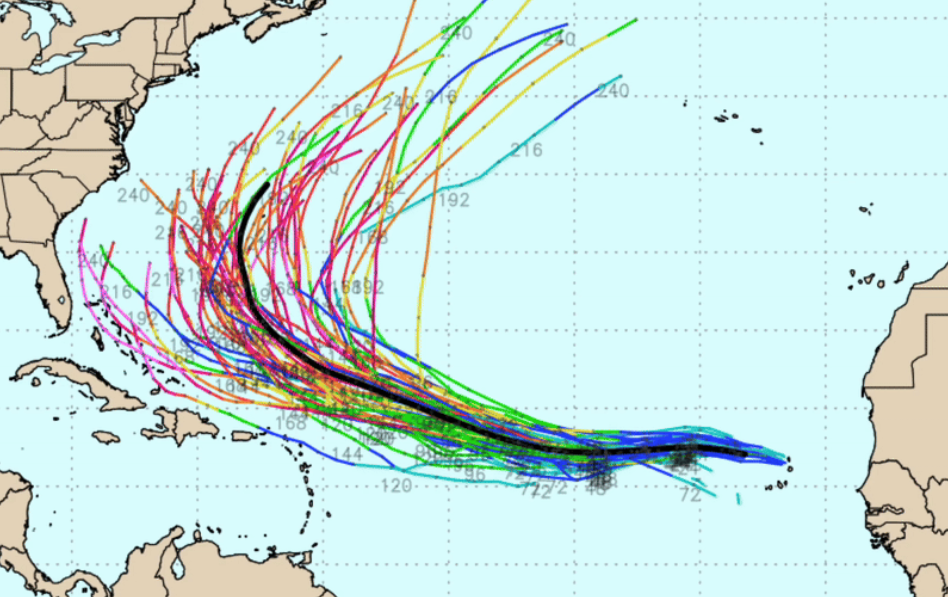
NOAA Spaghetti Model for Tropical Storm Erin, August 11, 2025. Courtesy, NOAA
AI Hurricane Forecasts: AI is being harkened as the next huge shift in most industries – and the notoriously difficult field of storm forecasting is no exception. According to a Miami Herald article, some experts, like those at Google’s DeepMind AI, say their hurricane predictions may already be better, faster, and cheaper than traditional models, and these benefits are already showing themselves even on small sample sizes. While we’re very far away from AI replacing the human components of meteorology, the clear and away best model for last month’s Hurricane Erin came from DeepMind. These large language models are effectively running the same pattern recognition from ChatGPT on global weather patterns, providing prediction on past trends and nothing else. This is a certain detour from the traditional models – which are simulated using realistic physics on giant supercomputers but use a lot less energy and can be run from a laptop. The rapid learning AI models also show promise in predicting not only the track of the hurricane but its intensity as well, which has been a problem historically. Forecasters have run into a few ceilings, like the limited 40 years of historic hurricane data, but are confident in this new tool and its ability to transform meteorology.
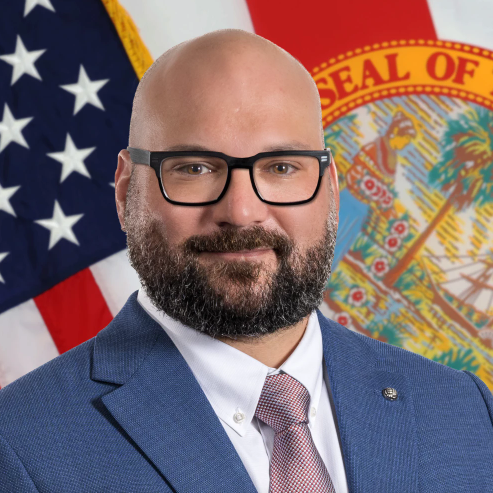
Eddy Bouza, Florida’s Chief Resilience Officer. Courtesy Florida DEP
Florida’s New CRO: Edward “Eddy” Bouza II has been appointed as Florida’s new Chief Resilience Officer, replacing Dr. Wes Brooks. Bouza is a certified flood plain manager and is the director of Resilient Florida, which has done groundbreaking work across the state disbursing grants for disaster preparedness and response. Recognized as a “champion for Florida’s environmental resilience,” Bouza brings years of experience in implementing mitigation strategies for stronger communities, building on stakeholder collaboration framework laid by his predecessor. LMA congratulates Eddy Bouza on all his work hardening our state against the elements and we look forward to his visionary leadership.
 LMA Newsletter of 9-8-25