

Plus, the newest oil drilling ban & red tide costs
 The Big Beautiful Bill could slash Florida’s solar tax credits, Governor DeSantis approves a drilling ban on the Apalachicola River, and the real economic impact of 2018’s red tide is in the billions. It’s all in this week’s Environmental and Engineering Digest.
 Solar Credits: As the U.S. Senate works tirelessly into today to pass the contentious “Big Beautiful Bill” before the President’s intended July 4th deadline, Florida’s solar landscape is in danger of losing many of the tax credits that helped subsidize Sunshine State homeowner’s in their switch to clean energy. Last year, more than 40,000 Florida households installed solar panels, outpacing even California’s utility-scale solar on the grid – but about half qualified for and used the available federal tax credits. Proponents of solar worry that losing the 25D tax credit (which helps offset around 30% of the cost of solar panel installation) will cause a huge shift in the industry and undermine much of this progress in shifting Florida’s energy sources. On average, homeowners would pay around $10,000 more to install solar panels if the credits are rescinded, which could drastically shift interest for many Floridians and Florida based energy companies. Also on the chopping block: electric vehicle rebates, incentives for companies to build Florida solar farms, and the Solar for All financial aid program, which was set to provide millions to lower and middle class households to get started on their solar panel journey.
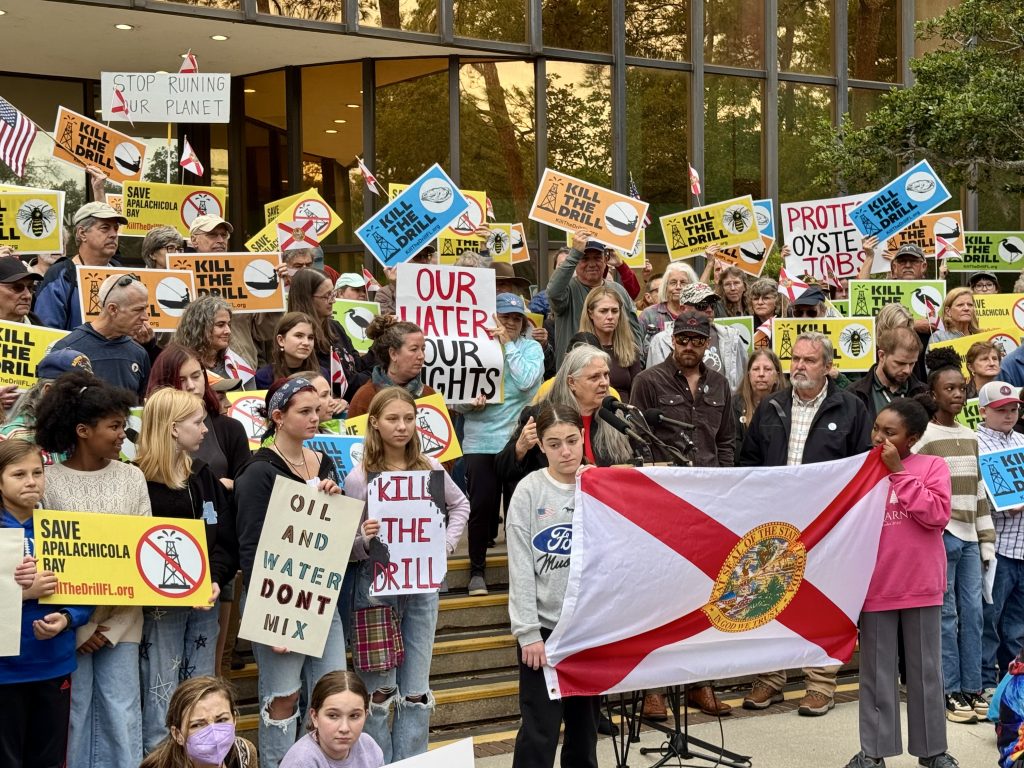
Protestors rally in front of the Florida Department of Environmental Protection to fight oil drilling on December 9, 2024. Courtesy, Apalachicola Riverkeeper
Killing the Drill: This past Thursday, the Governor signed a ban on exploratory drilling along the long-protected Apalachicola River which had been in the sights of Louisiana-based company Clearwater Land & Minerals Fla. since last year. HB 1143 was overwhelmingly approved by both parties this spring, and while the Florida Department of Environmental Protection (FDEP) initially issued a draft permit for drilling, the department quickly shifted to deny the permit, following recommendations of administrative law judge Lawrence P. Stevenson. An administrative challenge from the Apalachicola Riverkeeper kickstarted widespread protests, which culminated in DeSantis’ outright ban, in what many environmentalists view as a landmark victory. Opponents of the drilling, later supported by Stevenson’s ruling, argued that any level of spill could destroy the delicate balance of the Apalachicola Bay and its oyster industry, which only recently regained stable footing after years of hardship. “We’ve had fishermen and hunters and oyster farmers and seafood workers – really the entire community – just working on this for the last year,” said Gil Damon director of nonprofit Downriver Project who also took a stand against the drill. “We brought down Goliath.”
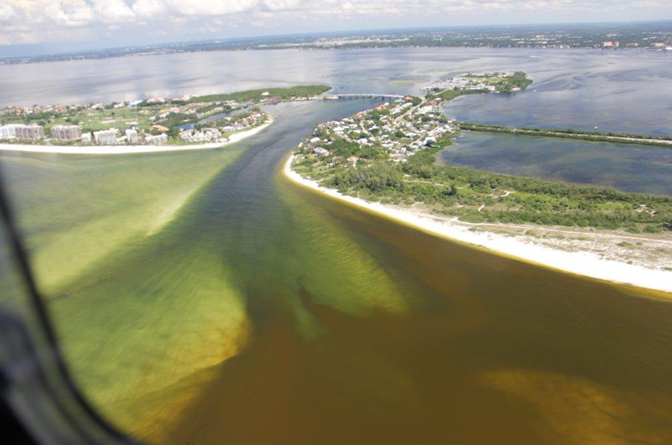
Red tide off Florida’s southwest coast during the 2017-2019 bloom. Courtesy, Mote Marine Laboratory’s Manatee Research Program
Red Tide’s Real Cost: Floridians, especially on the Gulf Coast, are no stranger to red tide blooms. However, the true toll of microscopic algae Karenia brevis is just now being uncovered. Previous damage estimates of around $318 million for the devastating 2018 bloom are now blown out of the water by a new NOAA-funded study that found $2.7 billion in total losses across South Florida. The dangers and health impacts from the blooms hamstring tourism industries almost completely, with plummeting revenues in hotels, restaurants, bars, and other coastline businesses in what researchers dubbed “Non-linear impacts” from the harmful blooms. By comparing average tourism data from the Florida Department of Revenue with data from the 2018 bloom, major losses and compounding impacts revealed themselves. While red tides are generally localized, larger blooms like this one – which stretched from Tampa to Fort Myers – can spell disaster for much of the state’s west coast and booming tourism industry.
 LMA Newsletter of 6-30-25