

Plus, the NOAA hurricane forecast and resilient home kudos
 A bipartisan effort to speed up FEMA block grants emerges, NOAA releases its 2025 hurricane forecast, removal of NOAAs billion-dollar weather database raises concerns for insurance companies, and a new Florida community is lauded as a model for hurricane-resistant construction. It’s all in this week’s Disaster Management Digest.
 A Faster FEMA: FEMA has been an ongoing topic of conversation with the current administration aiming to reorient the agency towards more direct funding to states with less red tape. Furthering this sentiment, U.S. Rep. Jared Moskowitz (D-FL) has partnered with Congressman Tim Burchett (R-TN) on two related bills, Disaster Housing Flexibility Act and Disaster Response Flexibility Act, which would allow states to opt into block grants for housing and public assistance after a major disaster is declared. Moskowitz, as a former Florida emergency management chief, is no stranger to the disaster management space – also filing the FEMA Independence Act to get FEMA out from underneath the Department of Homeland Security (DHS). If passed, the block grant legislation would allow states to offset some of their disaster costs, applying for federal grants covering housing and public assistance and associated disaster cleanup costs like debris removal. Both bills create new programs under the Stafford Act, and as such, if tapped by the states, would mean other Stafford Act assistance would be off limits. Moskowitz says the bills will increase disaster transparency, requiring applicants to submit spending plans and annual reports assessing impact. “FEMA can’t be eliminated,” said Moskowitz, “but we can save it by reforming it.”

NOAA 2025 Forecast: The National Oceanic and Atmospheric Administration (NOAA) is leaning a bit toward an above normal hurricane season this year, which officially started yesterday (June 1) and runs through November 30. NOAA is calling for a 60% chance of an above normal season and a 40% chance of a near-normal to below-normal season. You can read more in NOAA’s press release here.
 NOAA Disaster Database: On May 8, NOAA announced that its annual billion-dollar report on weather and climate disasters would no longer be available after 2024, citing “evolving priorities, statutory mandates, and staffing changes.” This raises concerns for many in the insurance industry, who regularly use the data to track losses due to secondary perils and have since its inception back in 1980. The numbers also inform parametric triggers within catastrophe bonds, and if further data cuts are made, these bonds may have to be redesigned with different modeling. Industry standard data sources like NOAA reports help companies streamline their pricing, reinsurance, and risk management, and keep the industry on track. Because secondary perils have become a major cause of loss in the U.S. property/casualty market, other data may have to be collected and reported to better help keep insurers and homeowners from risk exposure.
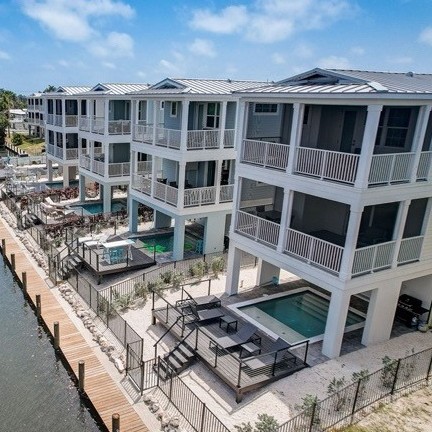 Hurricane Resilient Homes: FEMA has chosen a Florida West Coast housing development as an example of “leading the change in hurricane resilience” in its latest case study. Hunters Point, in the Manatee County town of Cortez, is turning heads and solving problems before they arise. Each home is elevated 16 feet above the flood zone and even garages are built six feet above the previous high-water marks. Two-by-six lumber frames the properties instead of the standard two-by-fours, and the homes are complete with hurricane-grade glass, steel roofs, and steel straps connecting each floor. The result? A community that survived Helene and Milton almost completely unscathed, never even experiencing a power outage thanks to the solar powered battery systems. Such foresight and highly cost-effective strategies serve as a model for communities in Florida moving forward and show how spending on above-code design can save lots of time and money in the long haul. FEMA noted that “above-code design could save $4 per $1 invested.”
 Marshall Gobuty is Managing Partner of Pearl Homes Developments, which created Hunters Point. I was happy to host him on last October’s Florida Insurance Roundup podcast, where he provided additional insight on these innovative building techniques. We were joined by Fred Malik of the FORETIFIED program at the Insurance Institute for Business and Home Safety and Scott Lidberg, CEO of NEXGEN Building Products, for a spirited discussion of what’s truly now possible to build better and smarter!”
Please stay safe this hurricane season!
See you on the trail,
Lisa
 LMA Newsletter of 6-2-25