

 Pandora
 Amazon
 Audible
An article in the Wall Street Journal suggests that Florida’s property insurance market is inherently flawed and financially shaky, under the review of a smaller ratings company. It cites the 12 insurance company insolvencies between 2019 and 2023 in a market painted as over-reliant on reinsurance.
Former Florida Deputy Insurance Commissioner Lisa Miller sits down with Demotech President Joe Petrelli and former Florida Insurance Commissioner Kevin McCarty to explain the unique nature of Florida’s market, how financial ratings of insurance companies are formulated, the critical role of reinsurance, the confusion between rate and premium, and the real reasons behind those insolvencies.

Joe Petrelli, President, Demotech
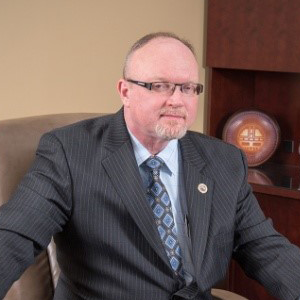
Kevin McCarty, Former Florida Insurance Commissioner; Manager & Founding Member, Celtic Global Consulting
Show Notes
Host Miller discussed the evolution of Florida’s property insurance market following 1992’s Hurricane Andrew, highlighting the departure of large insurers and the rise of smaller, regional companies that still make up most of today’s market. Miller, an employee of the then Department of Insurance, said “large legacy insurance companies left our state altogether, saying the risk exposure was just too great. Likewise, after 2017’s Hurricane Irma, other companies stopped writing new policies.”
Florida’s Unique Market
Miller noted that the state’s property insurance market has adapted over the ensuing 33 years to continue to provide needed insurance “for what’s become one of the riskiest places on earth to insure. It has unique challenges that have prompted innovative solutions.” One of those solutions was Demotech, a Columbus, Ohio-based actuarial firm that provided ratings for Florida’s new regional companies when other ratings companies would not.
Demotech’s Role
Demotech President Joe Petrelli said its specialty in reviewing and assigning Financial Stability Ratings (FSRs) for independent regional carriers was born of the need of federal mortgage backers Fannie Mae and Freddie Mac in 1988, who together own or insure a substantial number of home mortgages nationwide. They vetted Demotech’s ratings methodology and today, the firm provides FSRs for most of the 55 Florida based property insurance companies, including some of the recent 14 carriers who’ve entered the market since the Florida Legislature’s 2022-2023 litigation and consumer protection reforms. Now in its 40th year, Demotech rates insurance companies across the nation that write billions of dollars of premiums.
“We look at carriers independent of their size. We look at them based on their business model, the execution of that business model, and the complementary nature of their reinsurance program,” said Petrelli. “So I think that’s what makes us unique. I think when we look at catastrophe prone areas, whether it’s wind, fire, tornado, hail, earthquake, what we’re looking at is, does your reinsurance program give you the claims paying ability that you need?”
Kevin McCarty, as host Miller, also worked for the Department of Insurance when Hurricane Andrew made landfall. “We had major national insurance companies retreat from Florida. We had a million (policy) nonrenewals in the course of six months, which led to a moratorium on further cancellations and nonrenewals,” said McCarty, who would later serve as Florida Insurance Commissioner from 2003-2016. Without insurance, there would be no mortgages offered on homes that had to be rebuilt or on other real estate transactions. “There’s no question that Demotech was a transformational operation, with ratings recognized by Fannie and Freddie, which is just fortunate for our state, because the consequences would be unimaginable. It’s different than AM Best. If it weren’t for Demotech, and all we had was AM Best, we would not have had the resurgence in the marketplace after Hurricane Andrew, and certainly not after what happened in 2004 and 2005.”
Role of Reinsurance
As a result of Andrew – and the subsequent eight hurricanes that struck Florida in 2004 and 2005 – Florida is recognized as a “super peak” when it comes to catastrophic events, noted McCarty. He said another “critical piece” to stabilizing Florida’s market of startup or regionally-based carriers has been reinsurance, which is insurance for insurance companies.
“Leveraging the capital of these mid-sized firms with purchasing of reinsurance has enabled us to bring in billions of dollars of capital which has paid claims over the last decade, billions of dollars that would have (otherwise) gone on the backs of Floridians, had they been forced to be in Citizens Property Insurance.” McCarty noted that up to 40% of a consumer policy premium goes to purchasing reinsurance, “to maximize the capital dollars and spread that risk to a larger pool around the country, and it has been critical to our infrastructure.”
The Florida Legislature in the years following Andrew implemented other market stabilization methods. These included the creation of the Florida Hurricane Catastrophe Fund (Cat Fund) to provide lower-cost reinsurance for Florida carriers, and the creation of Citizens Property Insurance Corporation as an insurer of last resort for Floridians who couldn’t find insurance in the private market.
Creating the Cat Fund, Petrelli said, has made the reinsurance community comfortable doing business with Florida carriers, even more so with the recent legislative reforms. “Because the carriers themselves have been required to have reinsurance right around 10% or more of surplus, (that) can be their net retention, so they’re coming in relatively low for catastrophe coverage, but because of their catastrophe response plans, disaster recovery plans, their internal controls and procedures, they’ve been able to buy that reinsurance,” said Petrelli, including the available lower limits offered by the Cat Fund.
“I hear often that these Florida-based insurance companies are so heavily reinsured, and they say it in a condescending tone,” said host Miller. “I think it’s one of the best partnerships that can happen.”
McCarty agreed, noting that insurance companies of all sizes have been purchasing reinsurance for hundreds of years. “They (the small carriers) are heavily reliant on reinsurance and that is in large part because they don’t have a capital base,” said McCarty, who is Manager and Founding Member of Celtic Global Consulting, focusing on insurance and reinsurance issues. “You know, we could create a system where no insurance company would go insolvent, but you couldn’t afford the premium. Just like we can make homes that don’t blow over in a storm, but you might not be able to afford to buy the house. We have to be realistic.”
“Complex and fast-moving pressures”
Host Miller asked Petrelli about his quote in the recent Wall Street Journal article, explaining that Florida’s 12 insurance company insolvencies between 2019 and 2023 were driven by “complex and fast-moving pressures” that developed faster than most people in the industry expected. Petrelli said this occurred during the period when insurance regulators determined that Florida had 8% of all homeowners’ claims in the U.S., yet 76% of all homeowners’ claims lawsuits. He said the companies went under despite having clean, unqualified independent audits, and clean actuarial opinions in each of the years prior to their insolvencies.
“What we found was that the group of companies, over the period prior to the insolvencies, 2016, 2017, 2018, 2019, they had about a 3% market share. But when we dug into the (Florida) CFO’s website, looking at litigated claims, those companies that had a 3% market share consistently over the period prior to their insolvency saw their share of new litigated claims grow from 8% to almost 20% of the total litigated claims in the state of Florida,” said Petrelli, himself an actuary. He said one of those companies was dual rated with an “A” by both Demotech and AM Best.
That level of litigation and its unprecedented growth in those insolvent carriers, disproportionate to their market share, led Petrelli and his team to conduct further research. “That research project found that online, these carriers were being targeted, search engine optimization, pay per click, litigation marketing. So these carriers were litigated to death in a very short period of time. And the disproportionate level of litigation in the state of Florida, I personally believe, hid that fact, that would not have come out had we not developed a research project and had that undertaken,” said Petrelli.
The litigation statistics developed by Florida regulators “was paramount on the minds of investors” in the market, said McCarty, because “you could not put a figure or even a range of figures around the potential loss” because of litigation uncertainty.
“Whether you agree with the outcome or not, there was no doubt that the market was in free fall because of the uncertainty and the frequency and severity of the losses, largely based on the amount of litigation,” said McCarty. “That litigation is driven, evidence suggests, by the attorney’s fees being awarded, and frankly, the excessive award of attorney’s fees for bad faith, when simple miscalculation or mistakes shouldn’t rise to the level. The abuses in the legal system, the frivolous lawsuits, and the intervention of unscrupulous public adjusters created a culture where, after 90% of the claims were closed, they were reopened again within six months. Something had to be done to change the culture in Florida.”
The Florida Legislature responded with a series of litigation and consumer protection reforms that McCarty said he applauded, culminating in the end of mandatory one-way attorney fees for plaintiff attorneys that lawmakers and Governor DeSantis felt had wrongly incentivized lawsuits against insurance companies.
Future Public Policy Questions to be Considered
Host Miller and guests also discussed the upcoming session of the Florida Legislature that convenes in January 2026. She asked both what they would advise lawmakers to do or not do concerning Florida’s property insurance market, at a time when some are pushing for reversing the recent reforms.
“The thing that I would caution not just Florida’s legislature, but every legislature that looks at property insurance or any kind of material damage insurance, is not to promise rate decreases but rather promise stabilization of rate changes,” answered Petrelli. He cited ever-rising costs of material and labor in making claim damage repairs, which keep upward pressure on insurance rates. “Don’t promise rate decreases, because that may be a promise that can’t be kept.”
“I think what the investment market wants to see is consistency and certainty, and so the less tinkering, I think, the more confidence,” advised McCarty to Florida lawmakers. But he would like to see changes to the Cat Fund to make reinsurance even more available and affordable for insurance companies. “I think the most underutilized tool that we obtained after Hurricane Andrew was the Florida Hurricane Catastrophe Fund, and it has been modified over the years to reflect changes in the marketplace. But I think it can be used in a much more robust capacity, particularly with our small domestic market, to help bring down pricing by increasing that capacity,” said McCarty, noting that the Cat Fund’s capacity of $17 billion has remained unchanged since its creation, as total insured values in Florida have greatly risen.
Difference Between the Rate and Premium
The Florida Office of Insurance Regulation’s July 2025 Property Insurance Stability Report shows insurance rates are going down as a result of the legislature’s recent reforms. “Rate filings for 2024 showed a slight downward trend for the first time in years, indicating stabilization of the property insurance market,” according to the report. That downward rate trend has continued into 2025. For residential policies effective in 2024 or later, 27 companies have requested a rate decrease, and 41 companies have requested a 0% rate change. On the day this podcast was recorded (August 14, 2025), one of Florida’s largest companies, Florida Peninsula, announced an average decrease of 8.4% for its homeowners policies and a 12% drop for condo unit policies.
McCarty said distinguishing between an insurance rate and insurance premium is “really an important distinction to make” at a time when policyholders and lawmakers are clamoring for companies to lower rates. “Rate is a term that’s used in the actuarial world to mean the cost per unit per 1,000 of insurance coverage…to determine the base cost of your home, be it single family, year built, etcetera. But premium is what you pay for your insurance policy, and the rate is one of the determining factors,” explained McCarty. Other factors affecting the premium include actual property coverage value inside the home, hurricane and other deductibles, mitigation credits and discounts, and whether coverage is based on actual cash value or replacement cost of the loss. “So your premium will vary. The irony here is that your rate may go down but your premium may still go up.”
“One of the beauties of Florida over the years has been the appreciation in housing values,” added Petrelli. “You can’t have a half-a-million-dollar house last year and a $750,000 house this year and expect your premium to be the same.”
Defense of Demotech & the Market
Florida is a target-rich environment for catastrophes, with more hurricane landfalls than anywhere in the world, including 2024’s hurricanes Helene and Milton, and 2022’s Hurricane Ian. Petrelli said Demotech has proven itself a worthy evaluator of the financial stability of the insurance companies that protect Floridians from calamity.
“Arthur Schopenhauer said, ‘all truth passes through three stages.’ First, it’s ridiculed, second it’s violently opposed. Third, it’s accepted as self-evident. I think that Demotech can more than hold its own against the relative impairment rates of other rating agencies, and has passed through stage two…and we’re heading towards self-evident, which is where our record will speak for itself as the truth gets out,” said Petrelli.
McCarty, who as Florida Insurance Commissioner reviewed the strength of companies independently from Demotech, agreed. “You don’t have to listen to Joe or listen to me. We can just look at the facts. The facts are that Demotech has been in business since 1985. It has been evaluated stringently by Fannie and Freddie and it was validated as a quality system for evaluation. Then recognition in 2022 by the SEC, which, as part of the enhancements and the reforms in strengthening the financial system, Demotech received approval to be one of the 10 rating organizations acceptable. That’s a stringent review process as well. So sometimes you just don’t like the messenger. Sometimes it’s just you don’t want to hear what they have to say,” said McCarty.
“As Kevin McCarty has coined it over the years, we have the ‘crown jewels’ of a solid property insurance market in Florida,” said host Miller. “We have Citizens Insurance, which is doing well, now down to 770,000 policies. We have the Cat Fund, which is what I’ll call the best reinsurance mechanism to respond to what the market is doing around the world. And then, the Florida Insurance Guarantee Association as a backstop (that pays claims of insolvent insurance companies). Florida is a unique market. It’s not always perfect, but it’s working.”
Links and Resources Mentioned in this Episode
Property Insurance Stability Report (Florida Office of Insurance Regulation, July 2025)
Let insurance reforms work – Florida’s recovery depends on it (by Kevin McCarty, South Florida Sun Sentinel, July 9, 2025)
A comprehensive examination of insurer financial strength ratings (The Journal of Financial Perspectives: Insurance, December 8, 2017)
Report on Calculation and Validation of Insurer Impairment Rates for Demotech, Inc. (Michael M. Barth, The Citadel & Robert W. Klein, Georgia State University, February 2018)
Our Insurance Market Is in Crisis, but Shooting the Messenger Won’t Help (Kevin McCarty, The Demotech Difference, Fall 2022)
No Further Property Insurance Reforms Needed for Now (Lisa’s Blog, December 19, 2024)
Assignment of Benefits & Insurance Litigation Reforms webpage (Lisa Miller & Associates)
Subscribe to the LMA Newsletter and The Florida Insurance Roundup podcast (free)
** The Listener Call-In Line for your recorded questions and comments to air in future episodes is 850-388-8002 or you may send email to [email protected] **
The Florida Insurance Roundup from Lisa Miller & Associates, brings you the latest developments in Property & Casualty, Healthcare, Workers’ Compensation, and Surplus Lines insurance from around the Sunshine State. Based in the state capital of Tallahassee, Lisa Miller & Associates provides its clients with focused, intelligent, and cost conscious solutions to their business development, government consulting, and public relations needs. On the web at www.LisaMillerAssociates.com or call 850-222-1041. Your questions, comments, and suggestions are welcome! Date of Recording 8/14/2025. Email via [email protected] Composer: www.TeleDirections.com © Copyright 2017-2025 Lisa Miller & Associates, All Rights Reserved